

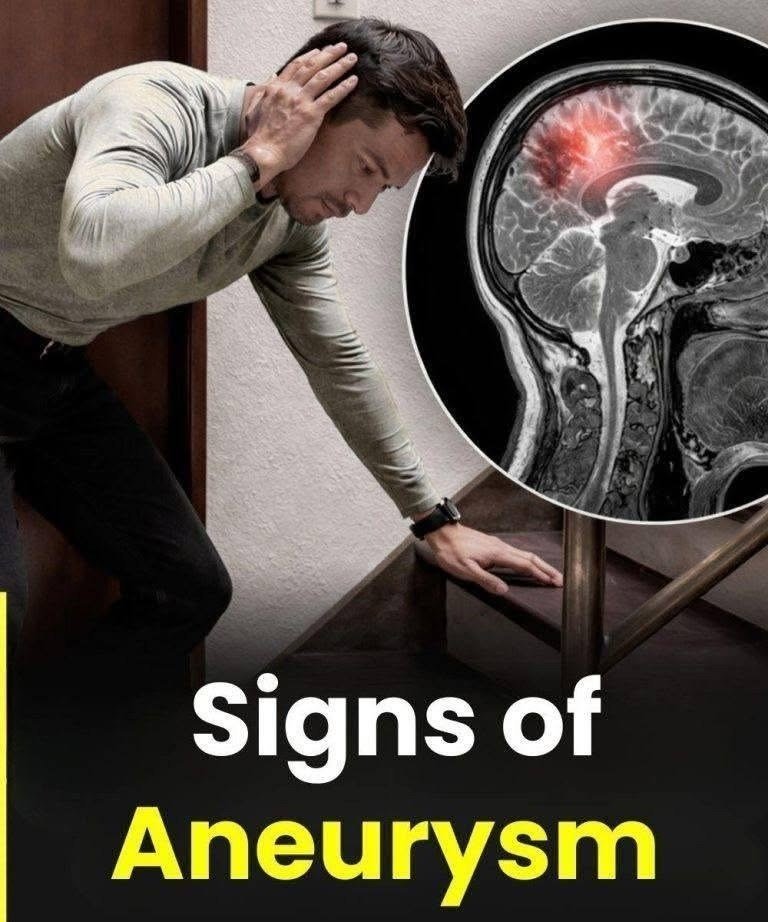
Aneurysm: Signs you shouldn’t ignore… See more👇


# Aneurysm: Warning Signs You Should Never Ignore
An aneurysm is often called a “silent threat” because many people don’t know they have one until it becomes a medical emergency. While some aneurysms remain small and never cause problems, others can grow over time and, in some cases, rupture. A ruptured aneurysm can lead to life-threatening bleeding and requires immediate medical treatment.
The good news is that not every aneurysm ruptures, and some are discovered early through imaging performed for other reasons. Knowing the possible warning signs—and understanding when to seek emergency care—can help you respond quickly if symptoms occur.
It’s important to remember that many of the symptoms discussed below can also be caused by other conditions. However, **if symptoms are sudden, severe, or accompanied by changes in consciousness, weakness, or difficulty speaking, call your local emergency services immediately.**
## What Is an Aneurysm?
An aneurysm is a weakened, bulging area in the wall of a blood vessel. Over time, pressure from blood flow can cause that weakened section to balloon outward.
Aneurysms can develop in several parts of the body, but the most common locations include:
* **The brain (cerebral aneurysm):** Can lead to bleeding around the brain if it ruptures.
* **The aorta (aortic aneurysm):** The aorta is the body’s largest artery, carrying blood from the heart to the rest of the body.
* **Peripheral arteries:** Less common, but aneurysms can occur in arteries behind the knee, in the legs, or in other parts of the body.
Some aneurysms remain stable for years, while others enlarge and require monitoring or treatment.
## Why Do Aneurysms Develop?
Several factors may increase the risk of developing an aneurysm, including:
* High blood pressure
* Smoking
* A family history of aneurysms
* Older age
* Certain inherited connective tissue disorders
* Hardening of the arteries (atherosclerosis)
* Previous blood vessel injury
* Certain infections (rarely)
