

More protein isn't automatically better for everyone.
Protein needs vary depending on factors such as body size, age, activity level, and overall dietary pattern.
Current nutrition guidance emphasizes dietary diversity and moderation rather than assuming that maximizing one nutrient is the answer to every health goal.
That's why a snack containing 25 grams of protein isn't automatically superior to one containing 10 or 15 grams.
What else is in the food?
Does it contain fiber?
Are you getting fruits or vegetables during the day?
How much added sugar or sodium does it contain?
Does the food actually satisfy you?
These questions matter.
The "Real Food" Protein Test
Before buying another protein product, try this simple question:
Can I get protein from an ordinary food I already enjoy?
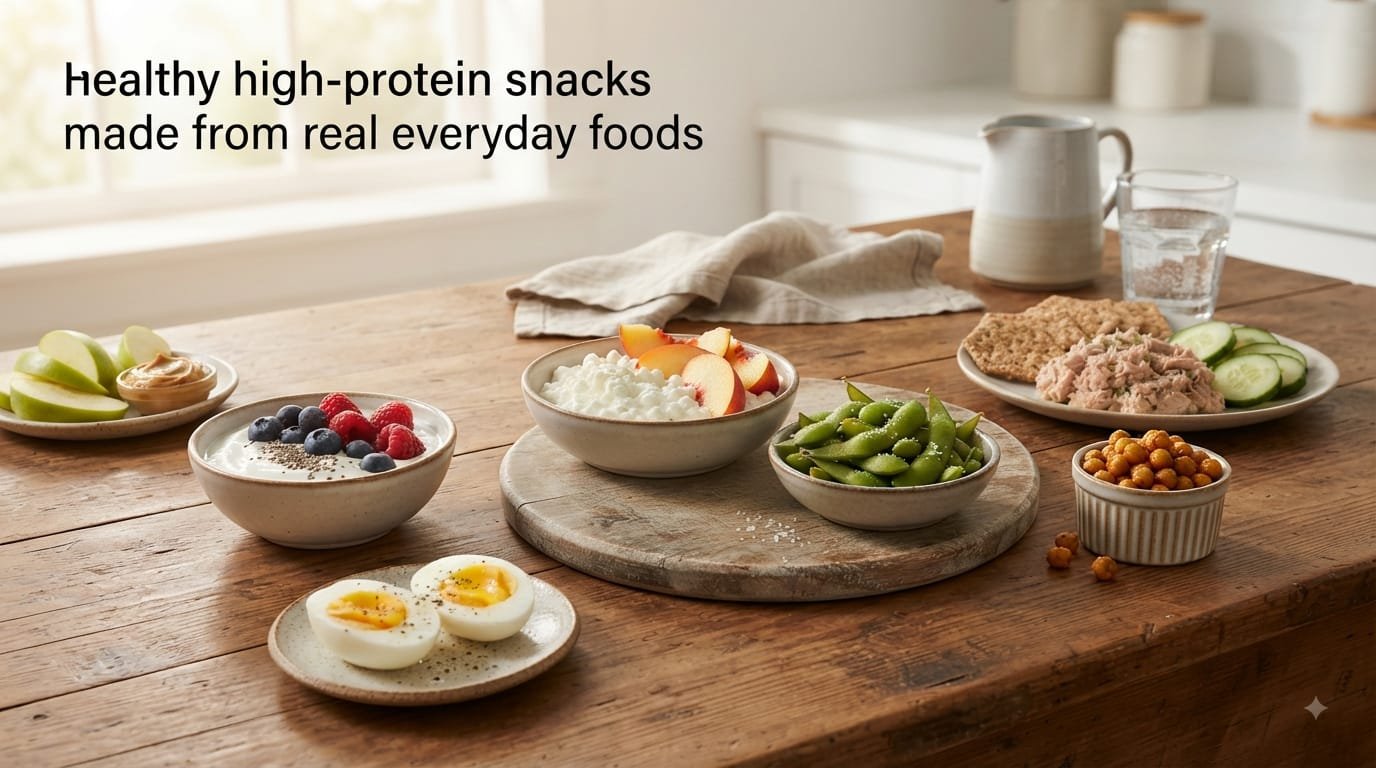
Maybe the answer is Greek yogurt.
Maybe it's an egg.
Maybe it's cottage cheese.
Maybe it's beans or edamame.
Maybe it's tuna.
Protein products can certainly be convenient.
But convenience doesn't mean they have to replace normal foods.
The strongest eating pattern is usually the one you can actually maintain.
What to Try Tomorrow
You don't need to completely change your diet.
Choose one snack you already eat.
Then improve it.
Instead of eating fruit alone, pair it with Greek yogurt.
Instead of reaching for chips every afternoon, try roasted chickpeas occasionally.
Instead of eating a sweet yogurt, try plain Greek yogurt with berries.
Instead of buying another protein cookie, try an egg and a piece of fruit.
Small changes can make everyday eating more satisfying without turning your kitchen into a laboratory.
The Bottom Line
Protein is clearly having a major moment in American food culture, but the best protein snack doesn't necessarily come in a shiny package with "HIGH PROTEIN" printed across the front.
Sometimes it's an egg.
Sometimes it's yogurt.
Sometimes it's cottage cheese and fruit.
Sometimes it's edamame.
The goal isn't to chase the highest possible protein number.
It's to build snacks that are enjoyable, practical, nutritious, and satisfying.
And that's something ordinary food can often do surprisingly well.
