

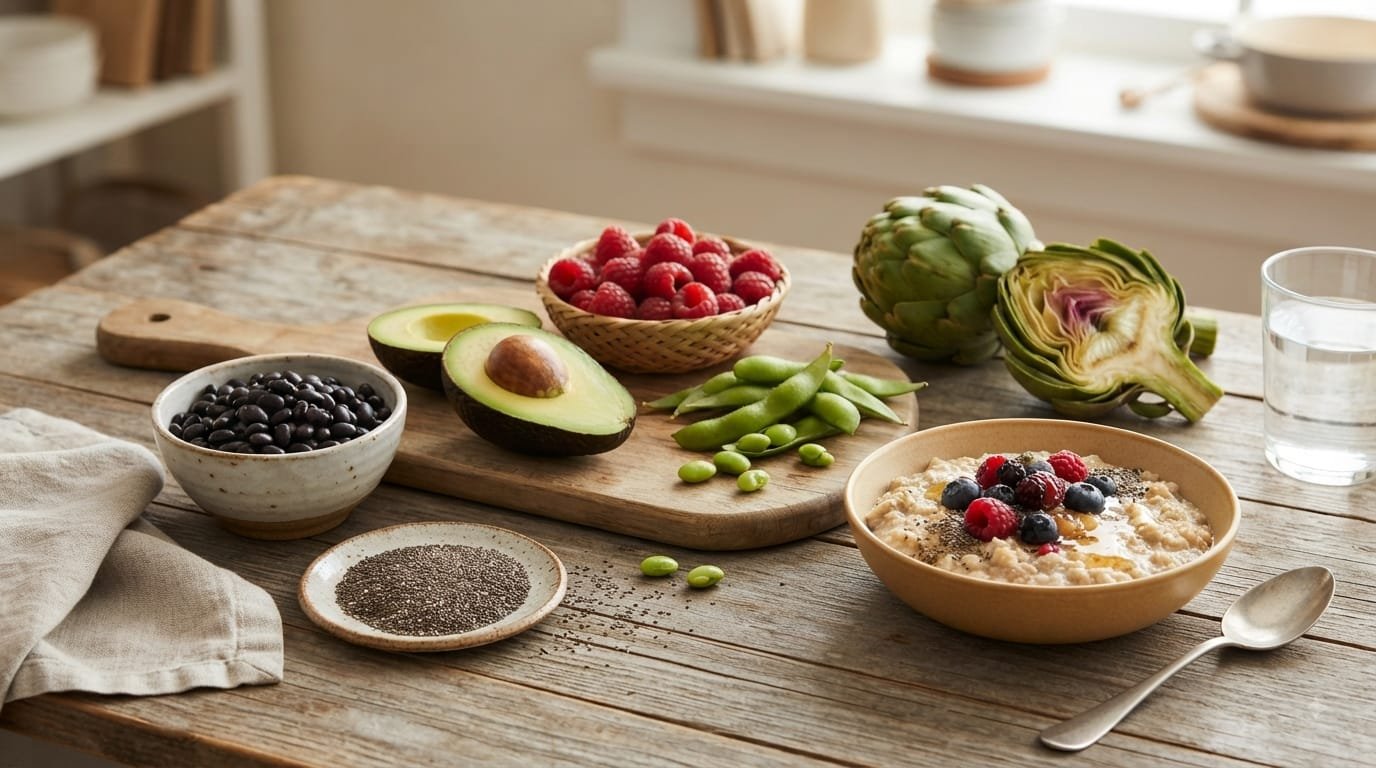
Fiber isn't just about "regularity."
Different types of fiber can behave differently in the digestive system, which is one reason nutrition experts generally encourage getting fiber from a variety of foods rather than relying on a single source.
If you're used to eating mostly refined grains and processed foods, adding vegetables such as artichokes can be one way to introduce more variety.
7. Oats
Oats are probably one of the easiest foods on this list to add to your routine.
They're inexpensive, widely available, easy to prepare, and naturally contain fiber.
A simple bowl of oatmeal can become much more interesting when you add berries, chia seeds, nuts, or sliced fruit.
And there's an important reason oatmeal deserves attention beyond breakfast.
Fiber-rich whole grains are specifically recommended as sources of dietary fiber by the National Institute of Diabetes and Digestive and Kidney Diseases.
That makes oats an easy starting point for someone who wants to make a small change without completely redesigning their diet.
Instead of asking:
"How can I eat a perfect diet?"
Try asking:
"What can I add to the meal I'm already eating?"
That question is much easier to act on.
Why Fiber Matters More Than Many People Realize
Fiber is not a single magical ingredient.
It's a group of carbohydrates that the body handles differently from digestible carbohydrates.
Some forms of fiber help add bulk to stool.
Some dissolve in water and can form a gel-like substance.
Some types are fermented by microorganisms in the digestive tract.
That is why simply saying "fiber is good" doesn't tell the whole story.
Different foods provide different types and combinations of fiber.
This is one reason variety matters.
Instead of getting almost all your fiber from one cereal, supplement, or food, you can build meals around beans, fruits, vegetables, whole grains, nuts, seeds, and other plant foods.
According to MedlinePlus, adults generally need somewhere in the range of 21–38 grams of fiber per day depending on age and sex, while NIDDK gives an adult range of about 22–34 grams per day. Individual needs can vary.
The exact number matters less than one simple observation:
Many people are eating less fiber than they realize.
The Biggest Mistake: Increasing Fiber Too Quickly
Here's something people don't always talk about.
If you're currently eating very little fiber, suddenly filling your diet with beans, chia seeds, whole grains, berries, and vegetables may not feel amazing.
You may experience gas or bloating.
That doesn't necessarily mean fiber is "bad for you."
It may simply mean your body needs time to adjust.
NIDDK recommends increasing fiber gradually, and getting enough fluids is also important when increasing fiber intake.
A better approach is to make small changes.
Add berries to breakfast.
Choose oatmeal instead of a refined breakfast pastry.
Add beans to lunch.
Put vegetables on your dinner plate.
Sprinkle a small amount of chia seeds into yogurt.
Over time, these small additions can become normal habits.
You Don't Need a "Perfect" High-Fiber Diet
One of the biggest problems with nutrition content online is that everything is presented as all-or-nothing.
You either eat perfectly…
or you're doing everything wrong.
Real life doesn't work that way.
You can eat a burger and still eat vegetables.
You can enjoy dessert and still consume fruit.
You can eat pasta and still choose a whole-grain version or add beans and vegetables to the meal.
You don't need to eliminate every food you enjoy.
Instead, think about what you can add.
That's where fiber becomes especially interesting.
Instead of focusing only on what you should remove from your diet, ask:
"What fiber-rich food can I add to this meal?"
That small shift can make healthy eating feel much more realistic.
A Simple Way to Start Tomorrow
You don't need a complicated meal plan.
Try this simple approach:
At breakfast, add berries or chia seeds to oatmeal or yogurt.
At lunch, add beans, vegetables, or a whole-grain option.
For a snack, choose whole fruit or a small handful of nuts.
At dinner, include vegetables, legumes, or whole grains.
And drink enough fluids as you increase your fiber intake.
The goal isn't to hit a perfect number overnight.
The goal is to gradually build a diet that contains a wider variety of plant foods.
The Bottom Line
Fiber may not have the glamorous reputation of protein.
It doesn't dominate social media in quite the same way.
But it deserves much more attention.
Black beans, chia seeds, avocados, raspberries, edamame, artichokes, and oats are just seven examples of foods that can help you bring more fiber into everyday meals.
And perhaps the most useful lesson is this:
You don't need to completely change the way you eat.
Start with one meal.
Add one fiber-rich food.
Then do it again tomorrow.
Small changes repeated consistently can be much easier to maintain than a dramatic diet overhaul.
If you're currently eating very little fiber, increase it gradually and make sure you're getting adequate fluids. People with digestive conditions or specific medical needs should discuss major dietary changes with a healthcare professional.
The next time you build a meal, don't only ask:
"How much protein is in this?"
Also ask:
"Where's the fiber?"
That one question could change the way you look at your plate.
