

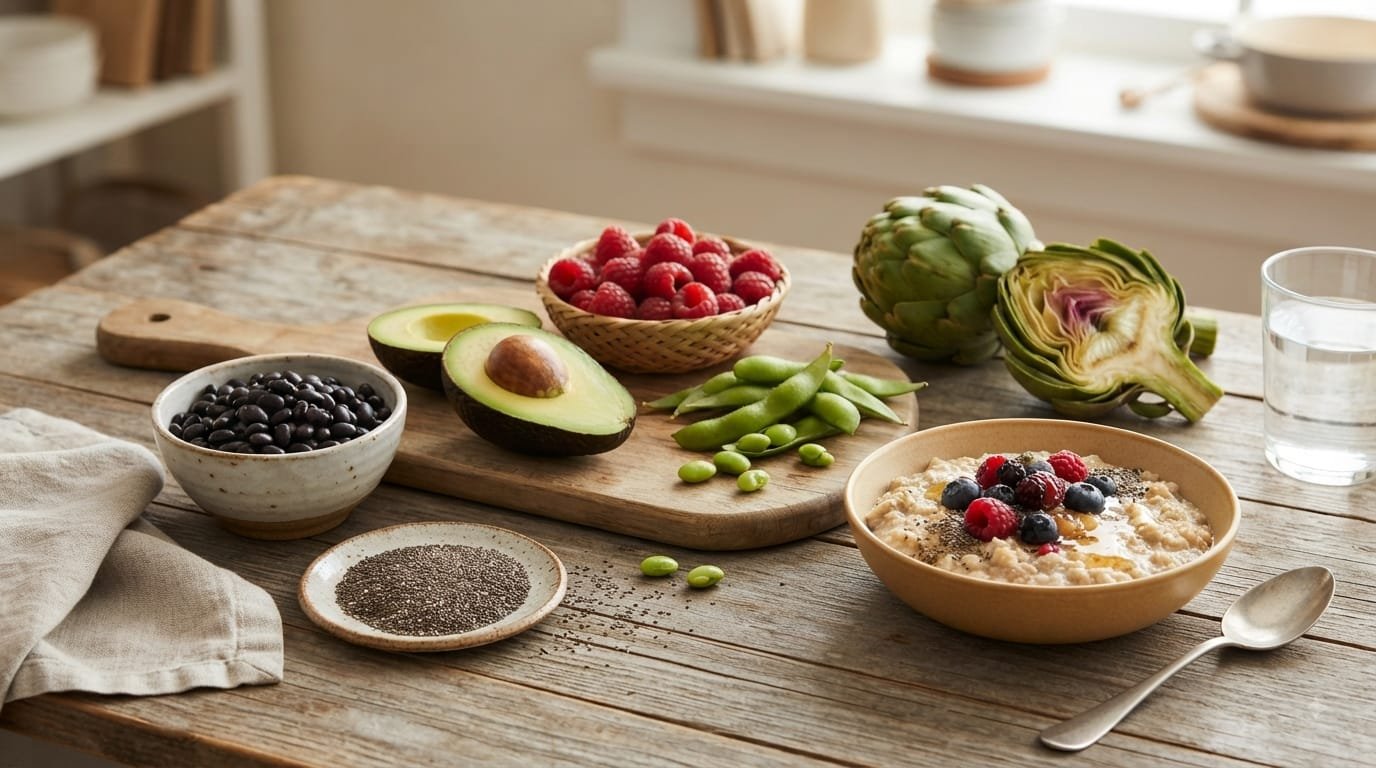
Put it on whole-grain toast.
Add it to a salad.
Or combine it with beans and vegetables for a more filling meal.
The bigger lesson is that increasing fiber doesn't have to mean eating the same bowl of bran cereal every morning.
There are many different foods that can contribute.
4. Raspberries
If you enjoy something sweet, raspberries can be an easy way to bring more fiber into your diet.
A half-cup serving contains around 4 grams of fiber, according to EatingWell.
That's one reason berries can be a smart addition to breakfast or snacks.
Try adding raspberries to plain or Greek yogurt.
Put them over oatmeal.
Mix them into a smoothie.
Or simply eat them as a snack.
One of the advantages of using fruit as a fiber source is that you're getting much more than fiber alone. Whole fruits can also provide vitamins, minerals, water, and other naturally occurring compounds.
And there's a simple distinction worth remembering:
Whole fruit and fruit juice are not interchangeable.
When you're specifically trying to increase dietary fiber, whole fruit is generally the more useful choice because much of the fiber is associated with the fruit itself.
5. Edamame
Edamame might not be the first food that comes to mind when someone says "high-fiber food."
But these young soybeans are worth a place on the list.
A half-cup serving provides about 4 grams of fiber, according to EatingWell's comparison.
Even more interestingly, edamame provides plant protein as well.
That combination makes it a convenient option for people trying to build meals around both protein and fiber—two nutrients that have become major themes in the 2026 food landscape.
You can eat edamame as a snack, add it to salads, mix it into rice bowls, or serve it alongside other vegetables.
Frozen edamame is particularly convenient because it can be kept on hand and prepared quickly.
Again, the goal isn't perfection.
It's variety.
The more different fiber-containing foods you can comfortably include in your meals, the easier it can become to increase your overall intake without feeling like you're following a complicated diet.
6. Artichokes
Artichokes are another food that doesn't always receive enough attention.
One whole artichoke can provide roughly 7 grams of fiber, according to EatingWell.
They're also interesting because artichokes contain inulin, a type of prebiotic fiber.
Prebiotic fibers are carbohydrates that can be used by certain microorganisms in the gut.
That doesn't mean you should suddenly start thinking of one food as a miracle cure for your digestive system.
Your gut is complicated.
But it does illustrate something important:
