

This doesn't mean every meal needs an enormous amount of protein.
Instead, consider whether your meals contain a recognizable protein source.
Eggs.
Greek yogurt.
Fish.
Chicken.
Beans.
Lentils.
Tofu.
Cottage cheese.
These are all examples.
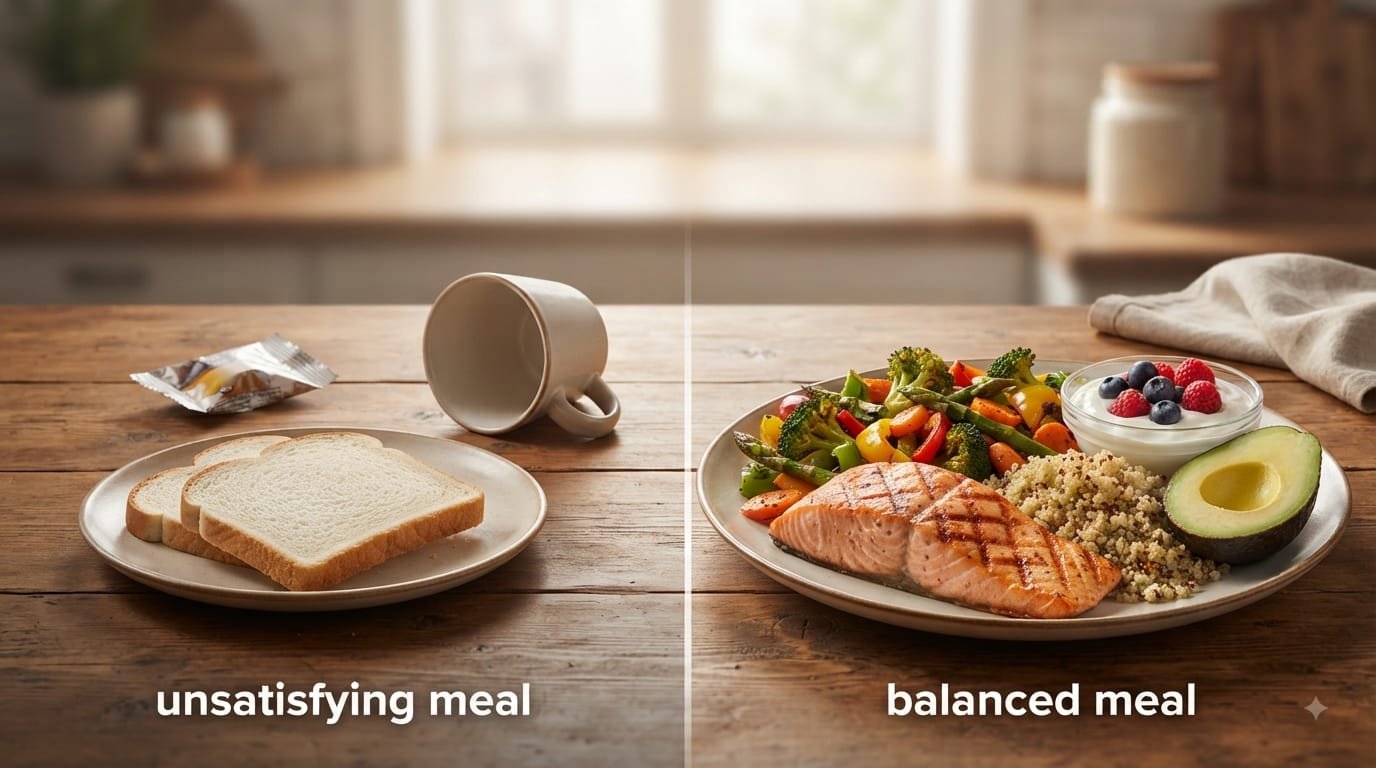
If your breakfast is mostly toast and jam, for example, adding eggs or Greek yogurt may create a more substantial meal.
3. Your Meal May Be Missing Fiber
Fiber is another major part of the 2026 food conversation.
Yet many Americans still don't consume enough of it. Penn State Extension reports that only about 5% of Americans meet recommended daily fiber intake, based on the data it summarizes.
Fiber-rich foods can add bulk and texture to meals.
Think:
Beans.
Lentils.
Oats.
Berries.
Vegetables.
Whole grains.
Nuts.
Seeds.
Avocado.
An easy way to experiment is to add one fiber-rich food to a meal you already eat.
Instead of changing everything, add berries to breakfast.
Add beans to lunch.
Add vegetables to dinner.
Add chia seeds to yogurt.
These small changes can increase the nutritional density of your meals.
4. You're Eating Too Quickly
This one has nothing to do with a specific food.
Sometimes the issue is how quickly you're eating.
If you eat while scrolling through your phone, watching television, driving, or working, it can be surprisingly easy to finish a meal without paying much attention to the experience.
Try slowing down occasionally.
Put your fork down between bites.
Taste the food.
Take a breath.
Give yourself time.
This isn't about forcing yourself to eat slowly at every meal.
