

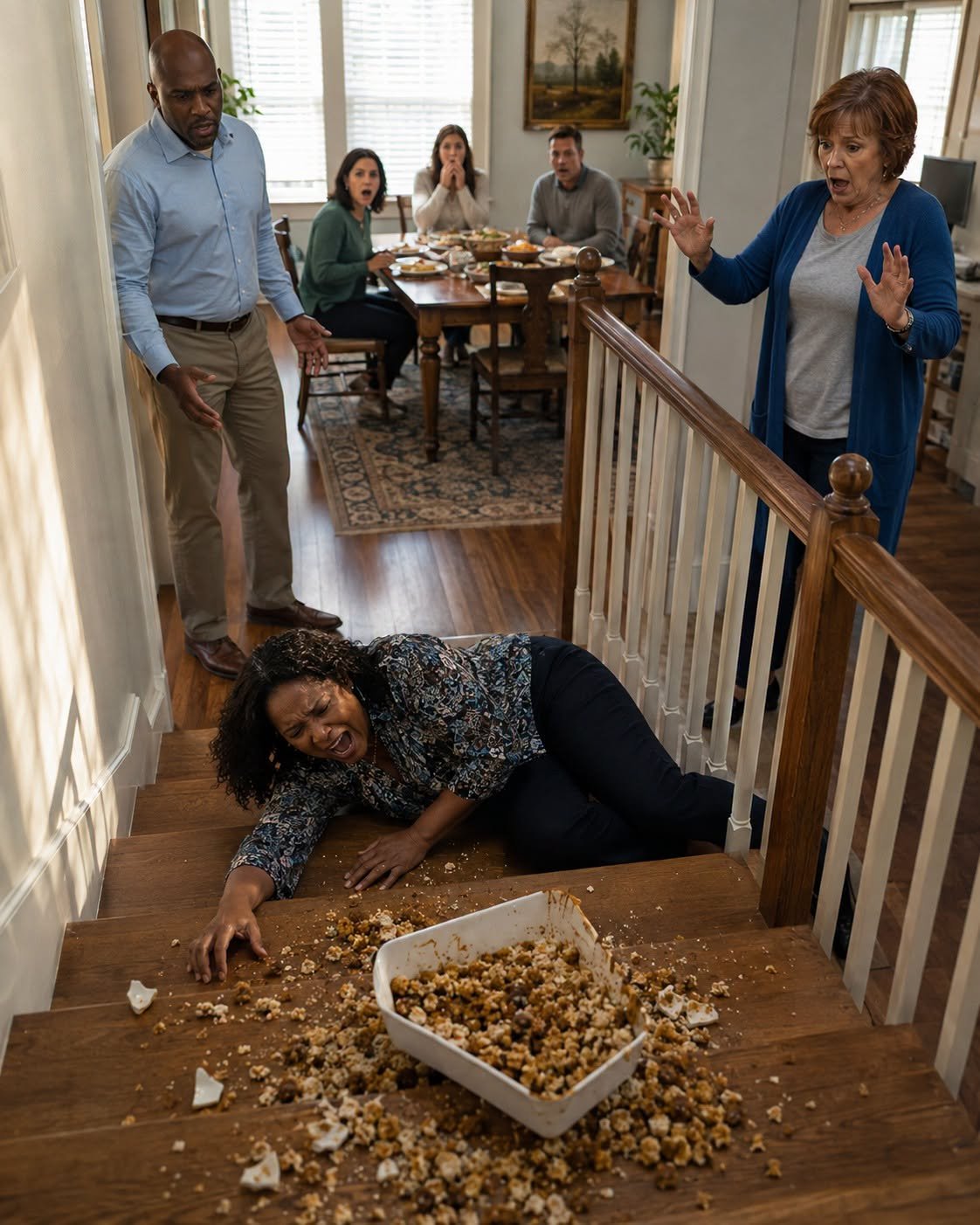
“The state calls Graham Miller,” Ms. Vance said.
Graham stood up immediately, as if he had been waiting for a spring to release him from his seat. He walked to the stand, his head bowed, and took the oath in a low, hesitant mumble.
He sat down and pressed his palms together flat, his fingers pointing toward the ceiling.
Ms. Vance walked to the table and picked up a single sheet of paper. “Mr. Miller, I am showing you a printout of a text message sent from your phone at eleven past eight on the night of October fourteenth.”
She handed the paper to him.
Graham looked at it for a long time, his eyes moving slowly across the page.
“Do you recognize this message?” she asked.
“Yes,” Graham said.
“Did you write this message yourself?”
“I did,” he said.
“Could you please read the message aloud for the court?” Ms. Vance asked.
The courtroom was completely quiet, the only sound the faint hum of the heating vent near the window.
Graham looked at the paper, then at the defense table. Judith was staring straight ahead, her jaw tight, her fingers still clasped in her lap. She did not look at him.
He cleared his throat. “I wrote that message because I saw my mother push her.”
The words sat in the room, heavy and plain.
Judith did not move, but her chin dropped slightly, her eyes fixed on the empty yellow pad on her attorney’s desk.
Her attorney stopped writing. He leaned back in his leather chair, his silver pen resting between his fingers, his eyes moving from Graham to the paper on the desk. He had not expected Graham to read the message with such clarity.
“And who is ‘she’ in this message, Mr. Miller?” Ms. Vance asked.
“My wife, Nora,” Graham said.
“And who did you see push her?”
“My mother,” Graham said, his voice cracking slightly on the last word.
“Thank you, Mr. Miller,” Ms. Vance said, taking the paper back from his hand. “No further questions.”
Graham stood up and walked down the steps, his face pale under the fluorescent lights, his eyes fixed on the floor. He did not look at me as he sat back down at our table.
Judith stared at the defense table while her attorney leaned over and began to whisper rapidly into her ear.
The prosecutor’s office was small and smelled of old paper and stale coffee. A green linoleum floor stretched under two heavy oak desks, and the window looked out over the gravel parking lot behind the courthouse.
He laid the blue folders flat across his desk, side by side, like roof shingles. His silver pen hovered over a signature line on the final page of the plea agreement.
“She signed it at noon,” he said, looking at me over his reading glasses.
“Did her lawyer try to fight the restitution?” I asked.
“They tried,” he said. “But we had the digital photos of the pressure mark from Dr. Mercer. And we had your husband’s sworn statement from yesterday morning.”
He turned the page so I could see the bottom of the sheet. Judith’s signature was small and precise, written in the dark blue ink she always kept in her purse.
“Twelve months of probation,” the prosecutor said, pointing his pen at the middle paragraph. “Mandatory anger management counseling, and a clean record only if she completes the program without further incident.”
“And the medical bill?” I asked.
“Four thousand eight hundred dollars,” he said. “Paid in full to your insurance provider to clear the debt. The check is already in our escrow account.”
I looked out the window at the brick alley behind the courthouse. A yellow maple leaf drifted down and stuck to the wet glass of a parked car.
“Will she actually go to the counseling?” I asked.
“The court appoints the therapist,” he said. “If she misses two sessions, the probation officer files a violation. She would face the original reckless endangerment charge.”
“I see,” I said.
“The text message you saved was the turning point,” the prosecutor said, closing the folder with a quiet thump. “Her lawyer knew that once your husband read that in open court, a jury would only need ten minutes to decide. The trial is canceled. You are finished here, Nora.”
I stood up, adjusting my watch strap out of habit, though the leather was already loose on my wrist. My ribs gave a small, sharp pinch when I took a deep breath, but it was nothing like the burning pain of those first nights at Vera’s house.
“Thank you,” I said.
He nodded, his mind already moving to the next file on his desk. “Take care of yourself, Nora.”
The drive back to Maple Street was short. I parked my car in the gravel lot behind the building and climbed the two flights of stairs to my new apartment, holding the black iron railing with my right hand.
The rooms still smelled of fresh paint and cardboard. Three boxes of kitchen spices sat on the laminate floor near the stove, waiting for me to buy shelf paper.
At four o’clock, the metal buzzer on the wall gave a sudden, loud rattle.
I pressed the button to let him in, then stood by the open door of my apartment, listening to the slow, heavy thud of Graham’s work boots on the wooden steps. He carried a large white envelope under his arm.
“I brought the certified copies,” Graham said, stopping on the landing. He looked smaller in his winter coat, his shoulders curved inward.
“Come in,” I said.
He stepped into the narrow hallway and looked around, his eyes lingering on the single blue armchair by the window. He did not take off his coat.
“It is quiet here,” he said.
“Yes,” I said.
He laid the white envelope on the kitchen counter, aligning the edges with the border of the tile. “The prosecutor’s clerk gave me these after the hearing. I wanted to make sure you had your own set.”
“Thank you,” I said.
“I called the counseling center this morning,” he said. He pressed his palms flat together, his thumbs hooking over each other. “The one near the high school. They have an opening on Thursday evenings.”
“That is good, Graham,” I said.
“I told them we might want to come in together,” he said, his voice dropping. “For the first few sessions. Just to talk about how we handle things.”
I looked at the brass keys hanging from the small hook by my front door.
“You need to do this for yourself, not for us,” I said.
He looked down at his boots, then back at the counter. “I do not think I can fix this on my own, Nora.”
“You have to try,” I said.
He took a slow, deep breath, his chest rising against the heavy fabric of his coat.
“I keep thinking about Thanksgiving,” he said.
I did not answer. I stood with my hands in my pockets, waiting.
“The one three years ago,” he said, rubbing his chin with his thumb. “When we were all sitting around the table before the meal. My mother gripped your wrist when you reached for the butter.”
“I spent three years wondering if I had somehow nudged her hand under the tablecloth,” I said.
“No,” Graham said. “She waited until Paul started the prayer. She knew you wouldn’t pull away while everyone had their eyes closed.”
“And you watched her do it,” I said.
“I saw her fingers dig into your skin,” he said. “And when we were driving home, and you asked me why she was so angry, I told you that you were imagining things.”
“You said she was just clumsy,” I said.
“I was terrified,” he said. “I knew if I admitted she did it, I would have to choose between the two of you. And I did not have the courage to stand up to her.”
“You let me believe I was the one who was wrong,” I said.
“I know,” he said. “My father always told me that the easiest way to keep the peace was to apologize first and never ask questions. I thought if I stayed quiet, the anger would just burn itself out.”
He looked at the empty windowsill where the afternoon light was starting to fade into a dull, flat grey.
“And the Christmas before that,” he said. “With the gravy boat. She did not slip, Nora. I saw her hand tilt the ceramic before the gravy spilled onto your sleeve.”
“The cream cardigan,” I said.
“Yes,” he said. “I knew she did it on purpose. I saw her face right after. She was waiting to see if I would say anything.”
“But you didn’t,” I said.
“I went into the kitchen to help Paul get the coffee cups,” he said. “I thought if I didn’t talk about it, it would go away.”
I looked at my own wrist, remembering the pale red marks that had faded by the Friday morning after that Thanksgiving dinner.
“It never went away,” I said. “It just got heavier.”
“I know,” he said.
He reached into his pocket and pulled out a small metal ring with three keys attached to it. They made a sharp, clinking sound as he laid them on the laminate counter next to the white envelope.
“These are the keys to the house,” he said.
“Why are you giving them to me?” I asked.
“I am moving into an apartment near the school next week,” he said. “I cannot stay in that house alone. We should list it with the realtor.”
“We can do that,” I said.
“I told the realtor she could call you about the paperwork,” he said. “I signed the authorization form this morning.”
He stood there for another minute, his hands empty now, hanging loosely at his sides. He looked at the kitchen window, then at the small green plant sitting on the floor by the radiator.
“Do you think you will ever talk to me again?” he asked.
“I do not know, Graham,” I said.
He nodded slowly, as if he had expected the answer. He turned and walked to the doorway, his boots heavy on the wooden floor.
He did not look back as he stepped out onto the landing and began his walk down the stairs, leaving the apartment door open to the quiet hall.
I stood in the center of the kitchen and listened to the fading sound of his footsteps on the wooden steps.
The brass house keys sat on the kitchen counter in the afternoon light.
Vera arrived at eleven o’clock, carrying two paper cups of coffee in a cardboard tray and a small, green jade plant in a terracotta pot.
She used her elbow to nudge the door shut behind her, her left hand steadying the tray. She set the coffee on the largest of my cardboard boxes and walked over to the wide windowsill that faced the street.
“The woman at the nursery said this one needs very little water,” Vera said, placing the terracotta pot in the center of the wooden sill. “Once a week is enough, and only if the soil feels dry to the first knuckle.”
I sat down on the smaller box, my knees bent close to my chest. “It looks healthy.”
“It has good roots,” Vera said. She pulled off her knit gloves and stuffed them into her coat pockets. “The apartment feels warmer today than it did on Thursday when we brought the dresser up.”
“I bled the radiator valve yesterday afternoon,” I said, holding the paper cup she handed me. “The super showed me how to do it with a small brass key he kept on his ring. It hissed for five minutes before the water came.”
We sat together in the middle of the room, using the packing boxes as stools. The wood of the floor was old and wide, scrubbed down with vinegar until the grey film of the previous tenant was entirely gone.
“The landlord seems quiet,” Vera said, looking out the window at the parking lot. “He lives on the first floor.”
“He has a dog,” I said. “An old beagle that doesn’t bark. I only see them in the morning.”
“That is better than a noisy neighbor,” she said. “The walls in these old buildings are thick, but you can still hear things.”
“I haven’t heard a sound since I moved the mattress in,” I said.
“Did you find the extra light bulbs I left in the kitchen drawer?” Vera asked, taking a sip of her coffee.
“I did,” I said. “I put the sixty-watt ones in the bathroom and the brighter one over the sink so I can see the dishes.”
Vera took a slow sip of her coffee, her thumb tracing the rim of the paper cup. “The school board is meeting on Tuesday to discuss the transportation budget.”
“I have the ledger sheet ready,” I said, nodding toward my satchel on the floor. “The fuel costs are up four percent, and the maintenance line is higher because of the winter prep.”
“They will want to see the service records for the older buses too,” she said. “The superintendent is worried about the state aid.”
