

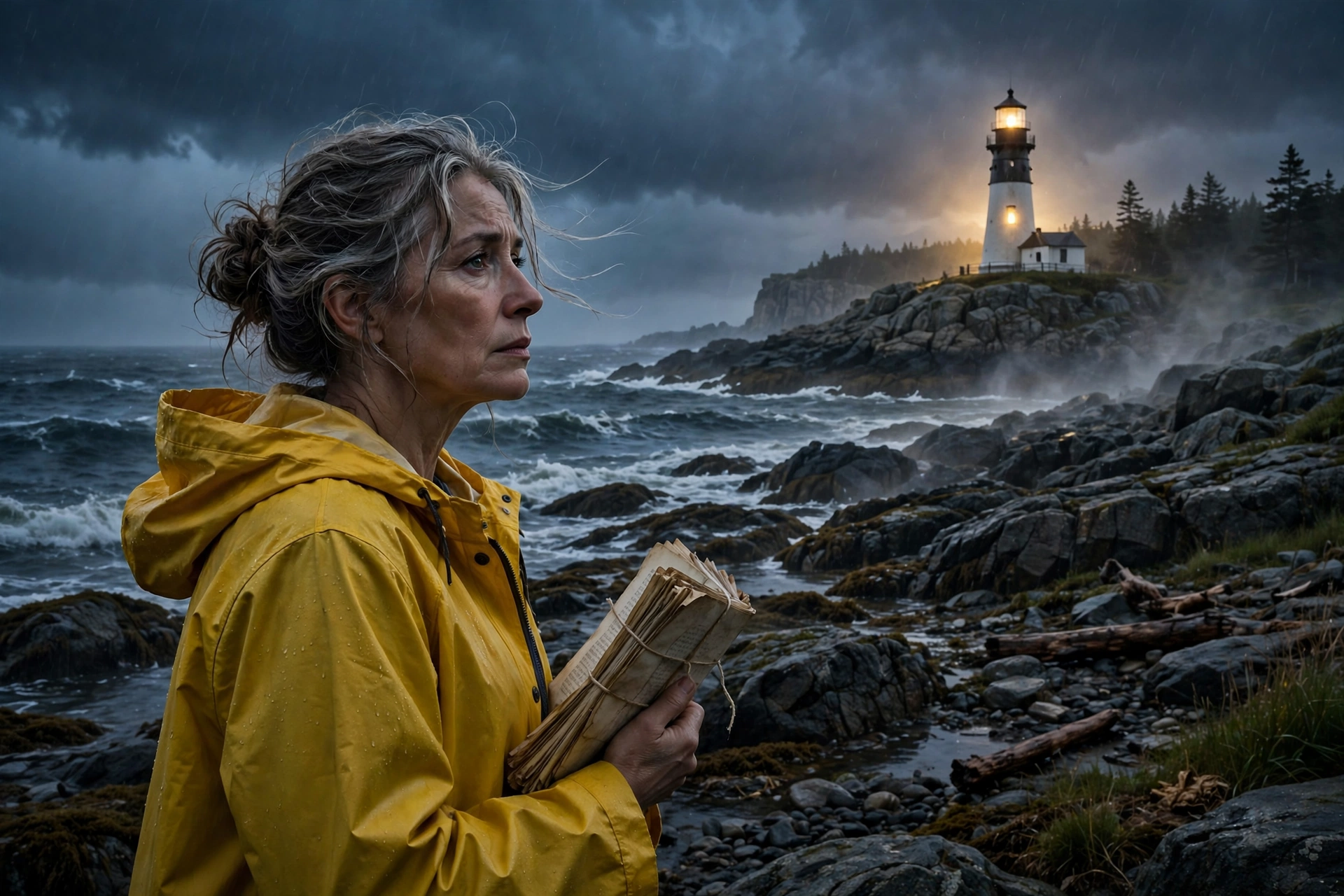
Daniel told me to be careful about the settlement offer. "They want to buy your silence, Nora," he said. "They'll offer you money — maybe a lot of money — but the offer will come with a nondisclosure agreement. You will never be able to tell your story. Sophie will never be able to tell hers. And Dana will keep the pen name, keep the fans, and do it again to someone else in two years." I did not need to think about it. "No," I said. "No deal. Not for any amount." Daniel smiled. "That's what I hoped you'd say. Now we build the trap."
The trap, Daniel explained, was not one big piece of evidence. It was a hundred small ones, laid out so carefully that Dana and her lawyers would not see the pattern until they were standing in the middle of it. Step one: the forensic document examiner. Daniel hired Dr. Elaine Foster, a handwriting expert from Boston, who examined the forged copyright signature, the forged "letter" Dana claimed I had written, and dozens of samples of my real handwriting. Her report was devastating: the forgeries were good, but they were too good — too careful, too slow, the way someone copies a signature instead of writing their own name. Real signatures have speed and variation. Forged ones have hesitation marks, tiny lifts of the pen where the forger stopped to check. Dr. Foster found hesitation marks all over Dana's documents. She also found something else: the ink on the "letter" was less than a year old, even though Dana claimed I had written it three years earlier. Science does not lie, and Dana's letter was lying.
Step two: the digital forensics. Daniel hired a computer expert named James Park, who examined the metadata of my manuscript files — the hidden information inside every document that records when it was created, when it was edited, and on which computer. My files showed a clear history: created on my laptop in 2022, edited hundreds of times over two years, with my name on the author field from the very first save. Dana's files, which her lawyers were forced to turn over in discovery, told a different story: her manuscript had been created in a single burst, in March of last year, by copying and pasting large blocks of text — and the author field on the earliest version still said "Nora Ellison." Someone had forgotten to change it. That someone was Dana, in a hurry, pasting my book into a new file and forgetting to scrub the metadata. James Park's report called it "conclusive evidence of copying." I called it justice, wearing a lab coat.
Step three: the witnesses. Daniel lined them up, one by one, each with a piece of the puzzle. My critique group friends, who had heard me read chapters of the lighthouse book aloud in 2022 and 2023. The librarian who had seen me working on it at the library computers. My neighbor, who remembered me telling her about the lighthouse widow character over coffee, two years before Dana's book appeared. Each witness was a brick. Together, they were building a wall Dana could not climb over. And Dana's lawyers, Daniel told me, were starting to realize it. They asked for a second settlement meeting. Daniel went, listened politely, and came back shaking his head. "They offered $800,000," he said. "With a full nondisclosure agreement. I told them my client would rather have the truth." I squeezed his hand. $800,000. A year ago, that number would have changed my life. Now, it felt like a bribe to let a thief keep stealing. I said no, and I did not lose a minute of sleep over it.
