

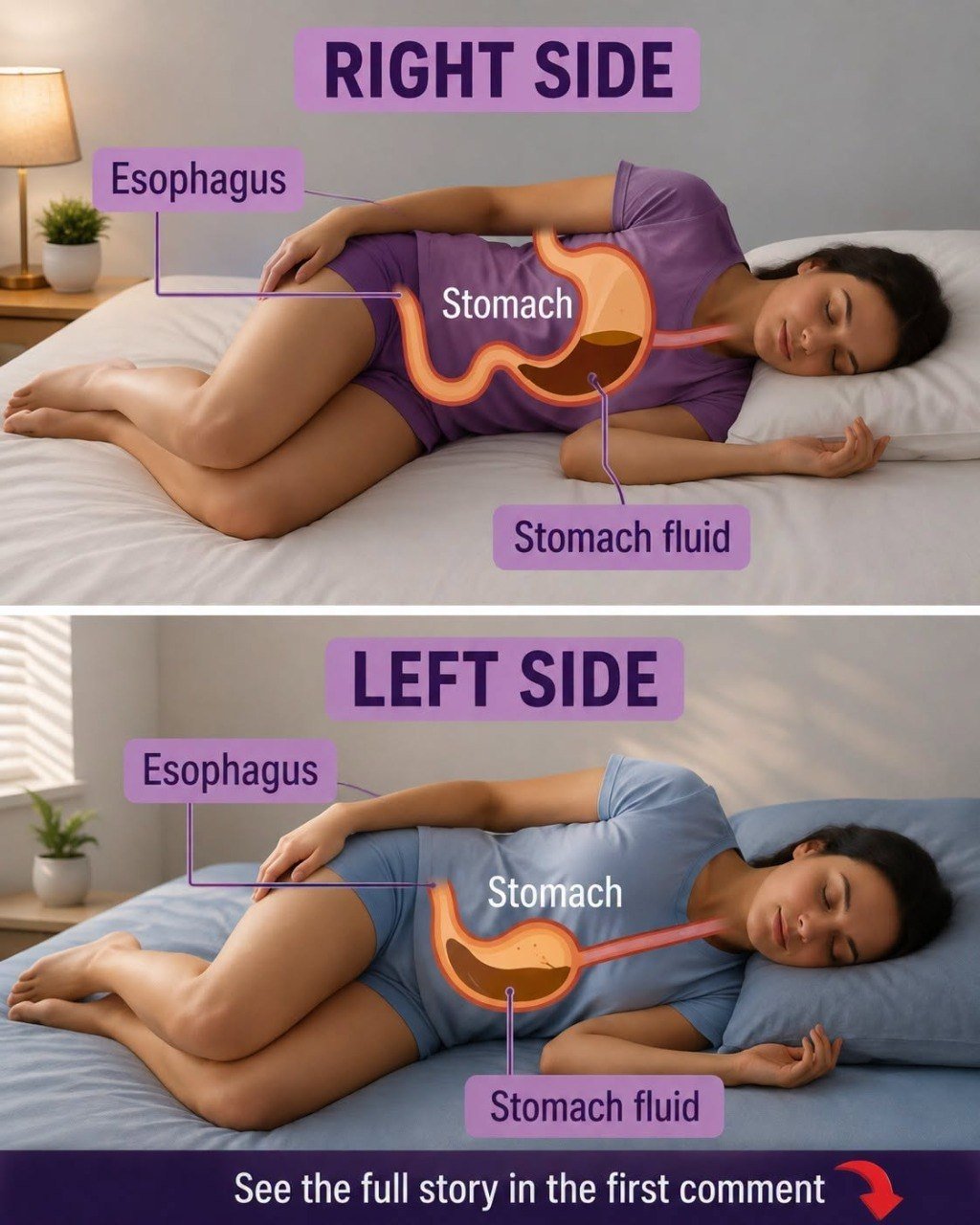
3. May Support More Comfortable Digestion
Some people notice fewer digestive symptoms when sleeping on the left side.
This position may help reduce occasional:
- Acid reflux
- Heartburn
- Bloating
- Mild digestive discomfort
Because of the stomach’s natural anatomy, lying on the left side may allow stomach contents to remain lower than the esophagus, potentially reducing the chance of acid moving upward.
People with frequent reflux should also avoid eating large meals close to bedtime.
4. May Support the Brain’s Natural Cleaning Process
One of the most fascinating discoveries in sleep science is the glymphatic system—a network that helps the brain remove waste products while we sleep.
Some animal studies suggest that side sleeping may support this natural cleaning process more efficiently than certain other positions.
Researchers believe this system may play a role in clearing metabolic waste that accumulates during the day. While these findings are promising, more human research is needed before firm conclusions can be made about sleeping position and long-term brain health.
5. May Promote Healthy Blood Flow During Pregnancy
Healthcare providers often recommend that many pregnant women sleep on their left side, particularly during later pregnancy.
This position may help:
- Improve circulation
- Reduce pressure on major blood vessels
- Support healthy blood flow to the uterus and placenta
Pregnant individuals should always follow the guidance of their healthcare provider regarding the most appropriate sleeping position.
Tips for Learning to Sleep on Your Left Side
Changing sleeping habits takes time, but a few simple adjustments may help.
Choose the Right Pillow
A supportive pillow should:
- Keep your neck aligned with your spine
- Fill the space between your shoulder and head
- Feel supportive without being overly firm
Use Pillows for Extra Support
Adding pillows can improve comfort by:
- Placing one between the knees
- Hugging a pillow to support the upper arm
- Using a body pillow to help maintain side sleeping
Some people even place a pillow behind their back to discourage rolling onto their back during the night.
