

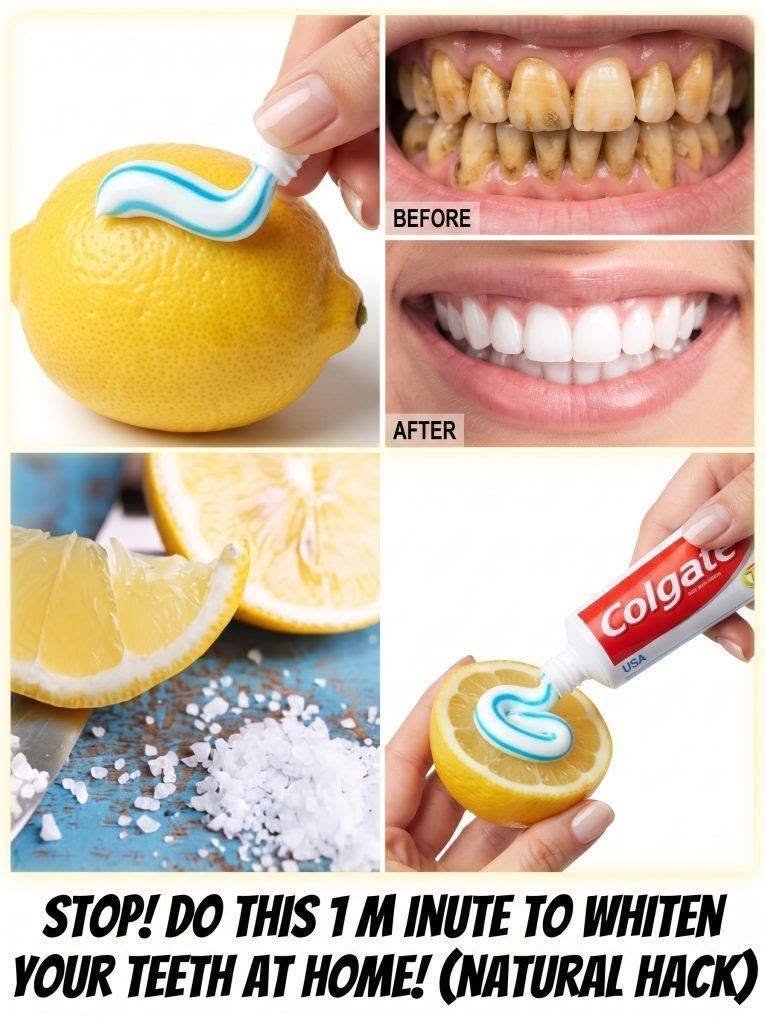
What is the whitening power of lemon?
Many homemade solutions claim to bring more shine to your smile. Among them, lemon is one of the most common methods because this acidic fruit is found in many kitchens.
Lemon naturally contains citric acid, a substance known for its ability to remove deposits. Its action can be compared to a descaling product used on appliances, helping eliminate buildup. However, unlike a coffee maker, teeth are living structures, and excessive acidity can gradually weaken tooth enamel.
This is why lemon should always be used with caution. Too much acidity can have the opposite effect of the desired result, similar to excessive friction on a fragile surface.
Why combine lemon with toothpaste?
The idea behind mixing lemon with toothpaste is to create a gentler formula while keeping the cleaning effect against stains. A fluoride toothpaste adds a protective element to the mixture, making it less aggressive.
This combination is similar to adding a protective agent to a household cleaning product: the goal is to maintain effectiveness while reducing potential harm.
The step-by-step method for whiter teeth
To prepare this homemade mixture, you need:
- 5 grams of fluoride toothpaste, approximately one teaspoon
- 1 millilitre of freshly squeezed lemon juice
To use the preparation:
- Carefully mix the two ingredients in a small bowl until you obtain a smooth texture.
- Apply the mixture with a soft-bristled toothbrush, avoiding excessive pressure.
- Do not leave the preparation on your teeth for more than 60 seconds. This short period is considered enough for a visible effect.
- Rinse thoroughly with lukewarm water after use.
How often should this treatment be used?
Even when diluted with toothpaste, lemon keeps some of its abrasive potential. For this reason, the application should be limited to a maximum of once a week.
Using it too often would be like repeatedly polishing a valuable piece of furniture: instead of improving the surface, constant treatment could eventually create damage.
