

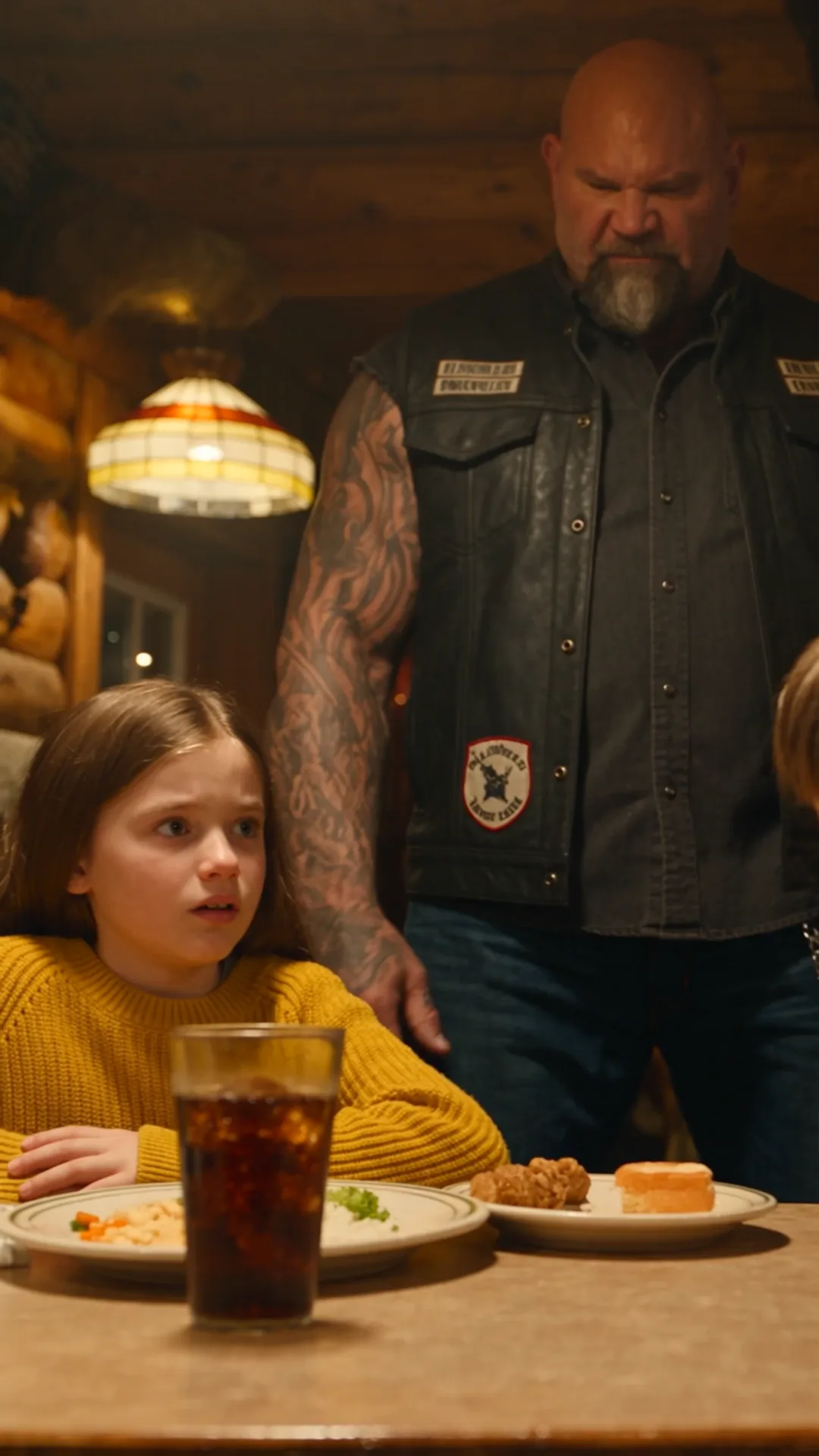
Then Wade asked:
“Did selling the land feel weird?”
“Yes.”
“Regret it?”
“No.”
“Why?”
Emma thought.
“Because the first offer wasn’t really an offer.”
“It was a threat with a number attached.”
“This time we chose.”
Wade nodded.
“That’s fair.”
She looked at him.
“You know what I hated most?”
“What?”
“That everyone kept calling you the man who saved my daughter.”
He looked uncomfortable.
“So did I.”
“You did save her.”
“But that isn’t the whole truth.”
“No.”
Emma leaned forward.
“The whole truth is that you were part of the reason she needed saving in the first place.”
Wade lowered his eyes.
“Yes.”
“And the whole truth is also that when the moment came, you did the right thing.”
“Yes.”
“I spent a long time wanting those two facts to cancel each other out.”
“They don’t.”
“No.”
He looked at her.
“They just both exist.”
Emma nodded.
“That’s what I finally figured out.”
She stood.
At the door, Wade called:
“Emma.”
She turned.
“Thank you.”
“For what?”
“For not making me better than I was.”
Emma considered that.
Then said:
“Become better than you were.”
And left.
Years later, Lily remembered very little about the legal case.
She remembered the glass.
The darkness.
Her mother holding her.
The scary biker shouting.
And one sentence:
Don’t touch the metal.
At seventeen, she asked Emma to tell the full story again.
This time Emma did not simplify it.
She told her about Grayline.
The land.
The fire.
The corrupted detective.
Wade.
Eric.
The recordings.
The trial.
When she finished, Lily said:
“So if Wade hadn’t been there that day…”
Emma did not finish the thought for her.
Maybe Lily would have touched the table.
Maybe Frank would have noticed first.
Maybe nothing would have happened.
Maybe everything would have.
Life is full of terrible alternate endings nobody gets to verify.
Emma simply said:
“He noticed the danger.”
Lily nodded.
“And before that, he helped dangerous people.”
“Yes.”
“That’s complicated.”
“Yes.”
Lily smiled.
“I liked stories better when villains just wore black.”
Emma laughed.
“So did I.”
Then Lily asked:
“What do you think the story is actually about?”
Emma looked across the rebuilt home.
Ben cooking outside.
Noah home from college, arguing with his father.
The oak tree finally tall enough to throw real shade.
She thought about a house burned because wealthy men wanted land.
A biker who mistook intimidation for work.
A detective who mistook corruption for convenience.
A boy nobody listened to when he noticed a car.
A little girl pulled away from a dangerous table.
And a family that finally got to decide what happened to something that belonged to them.
“It’s about choice,” Emma said.
Lily frowned.
“How?”
“Bad people kept taking choices away.”
“They tried to make us sell.”
“They decided which complaints mattered.”
“They decided what counted as an accident.”
“They decided fear was acceptable as long as nobody was supposed to get hurt.”
“And Wade?”
“He spent years pretending he had no choice.”
“Then he finally made one.”
Lily thought about that.
Emma continued:
“Doing the right thing once doesn’t erase everything you did before.”
“But doing wrong before doesn’t mean you should stop choosing better when you finally can.”
Lily smiled faintly.
“That sounds like something you’d put on a wall.”
“Absolutely not.”
The next week, Emma visited Maple Road Diner.
Behind the counter, Frank had installed a small wooden sign.
She stared at it.
WHEN SOMETHING FEELS WRONG, PAY ATTENTION.
Emma groaned.
“Seriously?”
Frank smiled.
“Good, right?”
“Terrible.”
“You’re impossible.”
She sat by the window.
A family entered.
Two children ran ahead.
Their mother called after them.
Ordinary noise.
Ordinary chaos.
Nobody afraid.
Emma watched them and realized that was what she had wanted all along.
Not revenge.
Not twenty million dollars.
Not headlines.
Not even an apology.
She wanted ordinary life back.
The kind where a child can spill soda and the worst thing that happens is somebody cleans it up.
The kind where lights go out because a bulb fails—not because somebody wants you afraid.
The kind where an offer can be refused without punishment.
The kind where telling the truth does not require courage because nobody is threatening you for speaking.
Grayline had believed power meant deciding what everyone else had to accept.
Wade once believed strength meant being frightening enough that people moved when he entered a room.
Emma had learned something different.
Real protection is not deciding for someone else.
It is making sure they are safe enough to choose for themselves.
And sometimes the first sign that everything is about to change is not a confession.
Not an arrest.
Not a courtroom verdict.
Sometimes it is a glass shattering.
A mother running.
A frightened child reaching toward the wrong thing.
