

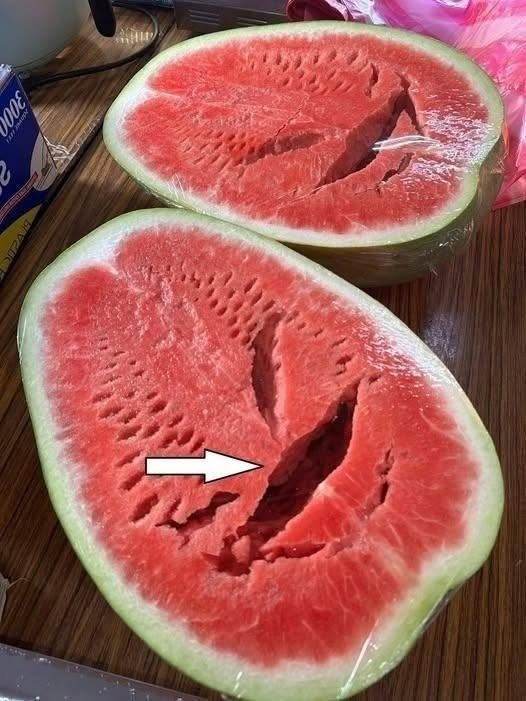
Sour or unpleasant smell: Fresh watermelon should smell lightly sweet, never sharp or acidic.
Slimy or mushy texture: Flesh that feels slippery or overly soft is breaking down.
Fizzy or tingling taste: A carbonated sensation points to active fermentation.
Dark or sunken spots: Discoloration or depressions inside the fruit often signal decay.
Cracks in the rind: These openings allow bacteria and air to enter, speeding spoilage.
If you notice any of these, it’s best to play it safe and discard the melon.
How Heat Makes Things Worse
Hot weather dramatically increases the risk of watermelon fermentation. Heat accelerates bacterial growth and metabolic activity, meaning spoilage can happen quickly — sometimes before there’s any visible external damage. In extreme cases, pressure buildup inside the melon can even cause it to crack or burst when you try to cut it.
To slow this process:
Store whole watermelons in a cool place or refrigerate when possible
Refrigerate cut watermelon immediately
Consume cut pieces within a few days
How to Protect Yourself
A few simple precautions can reduce your risk of spoiled fruit:
Inspect before cutting: Avoid melons with soft spots, cracks, or damp areas.
Wash the rind: Rinse thoroughly under running water before slicing to prevent contamination.
Use clean tools: Always cut with a clean knife on a clean surface.
Check after cutting: Look, smell, and sample a small piece before eating
