

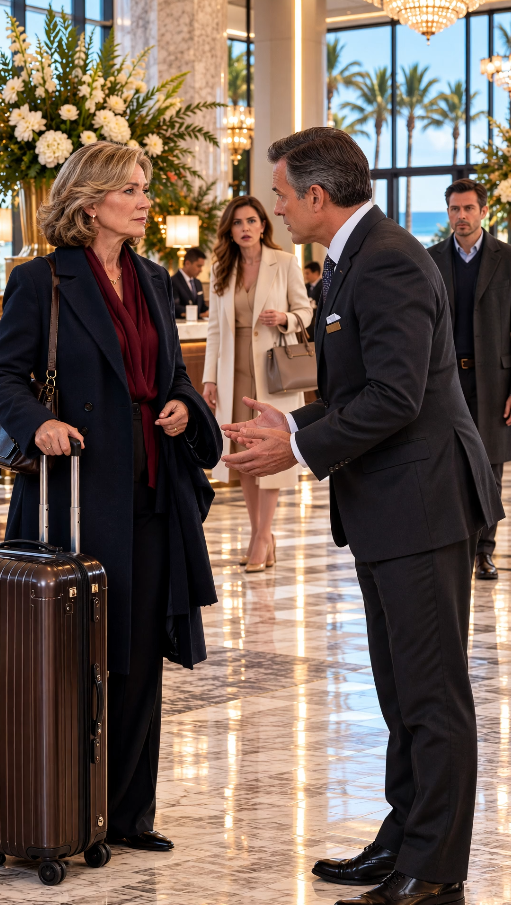
By sunrise, the missing papers had transformed an old family wound into a question none of us could ignore.
We returned home that morning.
Daniel drove.
Claire sat beside him, unusually quiet.
I sat in the back, watching the coastline disappear behind us.
No one mentioned Lydia Mercer.
Not until we reached my house.
Rosa met us at the door.
“I’m sorry,” she said.
“I should have noticed.”
“You did nothing wrong.”
The study showed no sign of forced entry.
Only the bottom drawer had been disturbed.
Daniel crouched beside it.
“Who has keys?”
“Rosa.
Me.
And the maintenance company.”
Claire suddenly looked up.
“Lydia.”
We turned toward her.
“She asked me questions about this house months ago.”
“What questions?”
Daniel asked.
“Whether Margaret still lived here alone.
Whether she traveled often.”
Daniel’s disappointment returned visibly.
“And that didn’t seem strange?”
“She was my mother’s adviser.
I trusted her.”
I sat at my desk.
“What exactly did you tell Lydia after you found the trust statement?”
Claire’s face reddened.
“More than I should have.”
“How much?”
“That there was a trust.
That Daniel didn’t know about it.
That I thought you controlled it.”
“And the papers you saw?”
“I described them.”
I closed my eyes.
Lydia had not been manipulating Claire because of Daniel’s inheritance.
She had been looking for something connected to her father.
I called my attorney.
Within an hour, we had our answer.
The missing files included decades-old partnership records from the accounting business Robert and I had once owned.
They documented transfers made by Thomas Mercer shortly before the company nearly collapsed.
Daniel read the copies stored in my attorney’s archive.
“He took money.”
“Yes.”
“Why didn’t Dad prosecute?”
“Because Thomas returned most of it.”
“Most?”
I looked toward the window.
“There was still a significant amount missing.”
“How much?”
“Enough to hurt us then.
Not enough to matter now.”
Claire sat very still.
“Lydia thinks you have proof her father stole it.”
“I did.”
“Did?”
“The originals were in that drawer.”
Daniel frowned.
“But your attorney has copies.”
“Yes.”
Claire stared at me.
“So taking them accomplished nothing.”
“Probably not.”
That afternoon Lydia called Claire.
At my suggestion, Claire answered.
Lydia did not sound threatening.
She sounded exhausted.
“I need to talk to Margaret,” she said.
We arranged to meet in my attorney’s office.
Daniel opposed it at first, but I insisted.
Lydia arrived alone.
She was younger than I expected, perhaps forty, elegantly dressed but visibly nervous.
When she saw me, she stopped.
“You look like Robert.”
“That’s an unusual thing to say.”
“My father kept a photograph of the three of you.”
I gestured toward the chair.
“Sit.”
She did.
My attorney remained nearby.
Daniel and Claire sat together across the room, though not touching.
I asked the obvious question.
“Did you enter my home?”
Lydia shook her head.
“No.”
“Then who took the records?”
“My mother.”
Claire inhaled sharply.
Lydia looked ashamed.
“She still had Thomas’s old key.”
My attorney spoke.
“That would still constitute unlawful entry.”
“I know.”
“Where are the documents?”
“With me.”
Lydia placed a folder on the desk.
Everything appeared to be there.
“Why take them?”
Her eyes settled on the folder.
“My father died believing Robert Harrison had ruined his reputation.”
I said nothing.
“He told us he made one accounting mistake and Robert used it to force him out.”
“That wasn’t what happened.”
“I know that now.”
She swallowed.
“My mother didn’t.”
Lydia explained that after her father died, her mother found old letters referencing the missing funds.
She became convinced Robert had concealed evidence that would prove Thomas innocent.
Years later, Lydia became Claire’s mother’s financial adviser by coincidence.
When Claire mentioned the Harrison name, Lydia became curious.
Then Claire told her about the trust papers.
“I thought there might be old records in Margaret’s study,” Lydia admitted.
“So you encouraged Claire’s suspicion,” Daniel said.
Lydia looked toward him.
“Yes.”
Claire’s face tightened.
“You knew I was angry with Margaret.”
“I did.”
“And you kept feeding it.”
“I told myself I was only asking questions.”
“That sounds familiar,” Claire whispered.
I understood what she meant.
She had told herself she was protecting her marriage.
Lydia had told herself she was protecting her father’s memory.
Both had acted on stories built from incomplete truths.
“What did your mother discover?”
I asked.
Lydia opened the folder.
“That my father took the money.”
No one spoke.
“He returned most of it because Robert gave him a chance to avoid prosecution.
Robert even helped him find work afterward.”
Her voice cracked.
“My father lied to us.”
I felt no satisfaction.
Only sadness.
“People sometimes protect their children from the truth badly,” I said.
Daniel looked at me.
The sentence belonged to both of our families.
Lydia returned every document.
My attorney handled the matter privately.
Because nothing had been damaged and everything was voluntarily returned, I chose not to pursue the matter further, provided Lydia’s mother never entered my property again.
When we came home, Claire asked to speak with me alone.
We sat on the back porch.
For a long time she watched the garden.
“I keep wanting to explain myself,” she said.
“I know.”
“But every explanation sounds like an excuse.”
“That can happen.”
She looked at me.
“I was cruel to you.”
I did not rescue her from the truth.
“Yes.”
Her eyes filled.
“I’m sorry.”
“I believe you.”
“Do you forgive me?”
I considered the question carefully.
“I’m willing to begin.”
She nodded.
It was not the answer she wanted.
But perhaps it was the answer we needed.
Daniel and Claire spent the next several months repairing things between them.
Not dramatically.
There were no grand declarations.
They went to counseling.
They argued.
They listened.
Sometimes Claire visited me alone.
At first, our conversations were awkward.
Then gradually they became real.
She told me about her childhood, about watching her mother lose everything, about the humiliation she had carried into adulthood.
I told her about Robert.
About nearly losing our business.
About being terrified and pretending not to be.
One afternoon she laughed softly.
“We’re more alike than I wanted us to be.”
“That may be why we irritated each other.”
A year later, Daniel turned forty-four.
I invited them to the resort again.
Claire hesitated when she realized where we were going.
“I have terrible memories of that lobby.”
“So do I.”
Then I smiled.
“We can make better ones.”
This time, when we arrived, she walked beside me.
Not ahead.
Not behind.
Beside me.
At dinner, Daniel asked about the trust.
“I don’t want to wait until forty-five.”
I raised an eyebrow.
“You don’t?”
“No.
I want to change something.”
“What?”
“When it transfers, I want part of it placed into a foundation.”
“For what purpose?”
He glanced at Claire.
She answered.
“Emergency housing for families who suddenly lose their homes.”
I understood immediately.
Claire’s mother.
Their history.
Their second chance.
I reached across the table and took her hand.
“I think Robert would have liked that.”
Later, as sunset turned the ocean copper, I stood alone on my balcony.
Daniel and Claire were walking along the beach below.
They were not perfect.
Neither was I.
Families rarely heal by discovering that one person was entirely right and another entirely wrong.
They heal when the truth becomes safer than the stories people invent to protect themselves.
Before going inside, I noticed an envelope beneath my room door.
No name.
Inside was a photograph.
Robert, Thomas Mercer, and me, all young and smiling outside our first office.
On the back, Lydia had written one sentence:
Thank you for letting the truth be the end of one story instead of the beginning of another.
I placed the photograph beside Robert’s old letter.
Then I looked once more toward the beach.
Claire had stopped walking.
She turned toward the balcony, saw me, and lifted her hand.
This time, there was no coldness in her smile.
I raised mine in return.
And for the first time since that suitcase hit the pavement, I understood that what happened at the resort had not exposed who owned the building.
It had exposed everything our family had been afraid to say.
The inheritance would transfer the following year.
The resort would continue without Daniel needing to run it.
And whether Claire and I would ever become the effortless mother-and-daughter pair people liked to imagine, I did not know.
But the following morning, when I came downstairs for breakfast, there were three places set at the table.
Claire looked up.
“We were waiting for you.”
I sat beside them.
And this time, no one wished I were somewhere else.
