

Part 15: The Trial Begins
September arrived hot and heavy in Tupelo, the kind of Mississippi heat that makes the air shimmer over the courthouse steps. The trial — State v. Melissa Thornton — opened on a Monday morning in the Lee County Circuit Court, and the courtroom was packed. Reporters, curiosity-seekers, my coworkers from the diner, Mom in the front row with her hands folded tight.
Melissa sat at the defense table in a beige suit, her hair pulled back, no makeup — the picture of a humbled, misunderstood woman. Her Memphis lawyer, a silver-tongued man named Preston Cole, had clearly coached her: look small, look sad, look like the victim.
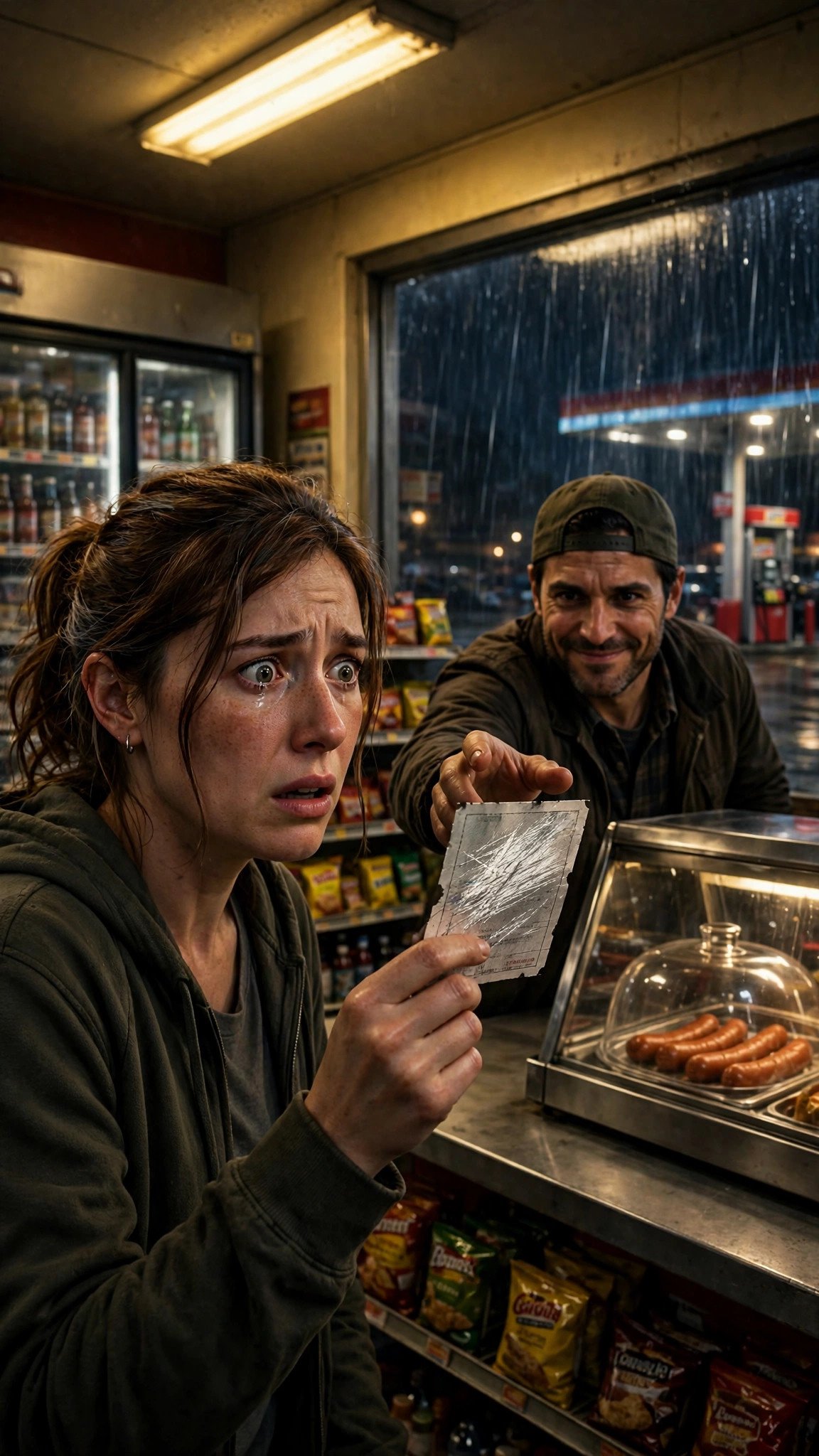
The DA, a sharp woman named Angela Foster, opened with the photos. She put my timestamped, geotagged picture of the signed ticket on the big courtroom screen, and you could hear the gallery gasp.
"Ladies and gentlemen," Angela said, "this is a photograph of the winning lottery ticket, taken by the victim at 8:47 PM on the night she bought it. Note the signature: EMILY THORNTON, in blue ink. Note the timestamp. Note the location. The defense will tell you this ticket was a gift. Ask yourselves: does a woman photograph a gift like it's evidence? Or does she photograph it because a store clerk just told her — correctly — that a signed ticket is the only thing standing between her and theft?"
Then she played the wire recording.
Melissa's voice filled the courtroom: "Marcus told me. He said nail polish remover takes the ink right off without hurting the ticket. I used cotton balls. It took like twenty minutes. Then I signed my own name in black, nice and neat. The lottery lady didn't even look twice."
I watched my sister's face as her own confession played. She went white. Preston Cole stared at his notepad like he wished he were anywhere else.
Then Angela played the second recording — Marcus's call: "the acetone worked perfectly... Emily's too stupid to prove anything... once the accounts unfreeze, we're leaving the country."
The jury — seven women, five men, most of them parents — looked at Melissa like she was something they'd scraped off their shoe.
Preston Cole's defense was exactly what Tom predicted: I was jealous, vindictive, a struggling single mother who'd invented a fantasy after losing her ticket. He put Melissa on the stand, and she cried — real tears, I'll give her that — and said, "I loved my sister. I would never steal from her. She gave me that ticket. She said, 'Mel, you need this more than I do.'"
Angela Foster stood up for cross-examination, and I will remember what happened next for the rest of my life.
"Ms. Thornton," Angela said, "you claim your sister gave you the ticket as a gift. Is that correct?"
"Yes."
"Then why did you remove her signature with acetone and sign your own name over it?"
"I — I didn't—"
"We have your confession on tape, Ms. Thornton. We have the cotton ball with your fingerprint. We have the lab report. Would you like to revise your testimony?"
Melissa looked at her lawyer. Her lawyer looked at the ceiling.
"Ms. Thornton," Angela continued, "you told Marcus Doyle that your sister was 'too stupid to prove anything.' Do you still think she's stupid?"
"I was upset, I didn't mean—"
"And the offshore account in the Cayman Islands — four hundred thousand dollars, transferred the day before your accounts were frozen. Was that also a gift from your sister?"
The courtroom erupted. The judge had to bang his gavel five times.
Melissa's composure cracked. Right there on the stand, in front of the jury, in front of Mom, in front of everyone — she screamed at me.
"You were supposed to SHARE it! You were always the favorite! Mom always loved you more! I deserved that money!"
And there it was. The truth, raw and ugly, screamed across a courtroom.
Preston Cole put his head in his hands.
Angela Foster smiled. "No further questions."
The trial lasted nine days. Marcus testified for the prosecution — all of it, the phone call, the fifty thousand, the notebook, the threats. Mrs. Gloria Delgado, eighty-one years old, took the stand in a wheelchair and pointed at Marcus and said, "That's the man who stole my fifty thousand dollars." The courtroom applauded. The judge had to gavel them quiet.
The jury deliberated for six hours.
I'll never forget the moment the foreman stood up. I'll never forget the way Melissa's knees buckled when she heard the first word:
"Guilty."
Guilty on all counts. Theft. Fraud. Forgery. Conspiracy. Witness intimidation. Threatening a minor.
As the deputies led her away, Melissa turned and looked at me. And for just a second — just one second — I saw my big sister again. The girl who braided my hair. The girl who walked me to the bus stop.
Then the moment passed, and she mouthed two words at me:
"You'll pay."
I mouthed two words back:
"I already did."
