

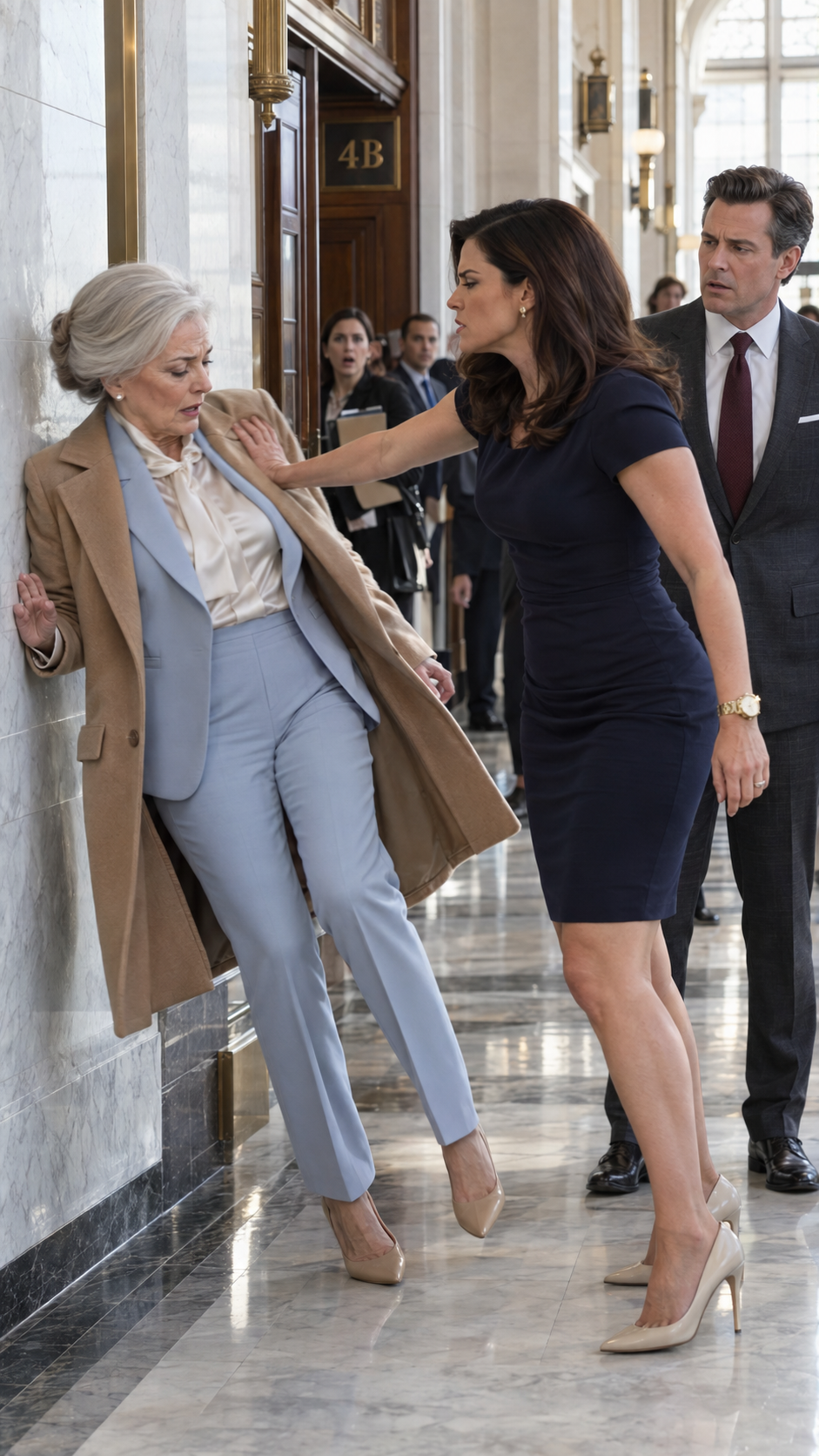
Chapter Two — The Robe
I closed the door behind me.
For several seconds, I stood perfectly still.
The chamber had once belonged to Judge Malcolm Hayes, who had retired the previous winter.
The court had asked me to return temporarily as a senior judge while a backlog of civil cases overwhelmed the county.
I had resisted at first.
After four decades in the law, I thought I was finished.
I had plans.
Gardening.
Travel.
Maybe finally learning how to paint.
Then I attended a judicial conference and listened to three younger judges talk about overloaded calendars, exhausted public defenders, and families waiting months for emergency hearings.
Two weeks later, I agreed to come back for a limited term.
David knew I had returned to the bench.
Clara apparently did not.
I had asked him not to make a fuss about it.
I did not want newspaper photographs.
I did not want a retirement-reversal dinner.
I wanted to work quietly.
David had been more than happy to keep quiet.
Now I understood why.
On the chair beside my desk lay the black robe my clerk had pressed that morning.
I removed my camel coat.
My hands were steady.
That surprised me.
Inside, I felt something much more dangerous than anger.
I felt clarity.
My law clerk, Melissa Grant, entered moments later.
She was thirty-two, brilliant, practical, and incapable of hiding concern.
“Judge Warren, I saw what happened.”
“I know.”
“Security saw it too.”
“I know.”
“Do you want me to call—”
“No.”
She stopped.
Then she looked toward the courtroom.
“They’re already seated.”
“Who?”
Her expression changed.
“The petitioners.”
I stared at her.
“Petitioners?”
Melissa reached for the docket sheet.
A few seconds later, she handed it to me.
I read the caption once.
Then twice.
WARREN FAMILY ASSET PROTECTION PETITION.
Petitioners:
David Warren.
Clara Warren.
Respondent:
Helen Warren.
My own name looked strangely unfamiliar.
“What is this?”
Melissa’s face had gone pale.
“It was filed under emergency seal yesterday afternoon.”
“Why was it placed on my docket?”
“It wasn’t originally. Judge Landry’s clerk moved several matters this morning because of his medical emergency. We received the transfer forty minutes ago.”
I kept reading.
Petition for temporary conservatorship.
Request for emergency financial supervision.
Allegations of cognitive decline.
Risk of dissipation of assets.
Possible undue influence by unknown third parties.
I almost laughed.
Instead, I sat down.
Melissa closed the door.
“Judge?”
“They’re trying to have me declared incompetent.”
“It appears so.”
“My son filed this?”
“Yes.”
I read the supporting declaration.
David described me as increasingly confused.
Emotionally volatile.
Forgetful.
Vulnerable to manipulation.
Unable to manage complex financial affairs.
Clara’s declaration was worse.
She claimed I had wandered away from restaurants.
Forgotten family birthdays.
Misplaced large amounts of money.
Become suspicious of relatives.
Refused appropriate medical evaluation.
There was even a statement from a private geriatric consultant I had never met.
I looked at the filing date.
Yesterday.
The same day David called and asked me to come to the courthouse.
My stomach turned.
“He wanted me here because of this.”
Melissa nodded slowly.
“They were apparently planning to serve you in person before the hearing.”
I leaned back.
For a long moment, I said nothing.
Then I began to laugh.
Not because it was funny.
Because the alternative was crying.
Melissa sat opposite me.
“You can’t hear this case.”
“I’m aware.”
“Obviously.”
“I will disclose the conflict on the record and recuse immediately.”
“Judge Landry is still unavailable.”
“Call Chief Judge Moreno.”
“I already did.”
That made me look at her.
“He’s upstairs. I told his chambers there may be a recusal issue.”
“You’re good.”
“You hired me.”
I looked again at David’s declaration.
My own son.
The boy whose fever I had monitored through nights when I had to work at six the next morning.
The teenager whose first broken heart I had carried with him.
The law student whose tuition I had supplemented even after scholarships because I never wanted him choosing between food and textbooks.
The young associate whose first apartment security deposit I had quietly paid.
He had signed a sworn declaration suggesting I could not manage my own life.
Why?
I already knew.
Money.
My late husband, Thomas, had left me more than David ever realized.
Thomas had been a civil engineer who spent thirty years buying modest pieces of commercial property before anyone else saw value in them.
After his death, I managed those assets myself.
Over time, the portfolio grew.
I never lived extravagantly.
David assumed there was perhaps two or three million dollars.
The actual value was closer to eighteen.
And six months earlier, I had quietly changed my estate plan.
I had not removed David.
But I had created restrictions.
No direct control of principal.
No access for spouses.
Education trusts for future grandchildren.
Large charitable distributions.
Professional trustees.
When David learned I had met with an estate attorney, he began asking questions.
Clara began asking more.
Then the campaign about my memory started.
Melissa spoke softly.
“Do you think this is about your assets?”
“Yes.”
“Do you have evidence?”
“Yes.”
She looked surprised.
“I’ve been collecting it for two months.”
Of course I had.
I was a judge.
Before that, I had been a prosecutor.
People sometimes confuse dignity with passivity.
They are not the same thing.
I opened my briefcase.
Inside was a slim folder.
Emails.
Voicemails.
Bank notifications.
Copies of documents.
A letter from my neurologist confirming normal cognitive testing after I had privately requested an evaluation.
A report from my accountant showing three unauthorized attempts to access trust information using David’s old power-of-attorney credentials.
And one particularly interesting email Clara had accidentally sent to me instead of David.
We only need temporary control. Once the court signs off, we can restructure everything before she changes the trust again.
I had read that email twelve times.
I had not responded.
Melissa stared at the folder.
“You knew.”
“I suspected.”
“Why didn’t you confront them?”
“Because people tell you much more when they think you know less.”
A knock came at the chamber door.
The bailiff entered.
“Judge Warren.”
“Yes?”
“Chief Judge Moreno is on his way.”
“Thank you.”
He hesitated.
“I also need to ask whether you want to make a report about the corridor incident.”
“Not yet.”
His jaw tightened.
“I saw her shove you.”
“So did half the hallway.”
“Yes, ma’am.”
“I’m not asking anyone to forget it.”
He nodded.
Then his expression softened.
“For what it’s worth, Judge, I’m sorry.”
“Thank you.”
When he left, I stood.
The robe waited beside the desk.
I lifted it carefully.
For years, putting on that robe had changed the way rooms saw me.
People sat straighter.
Lawyers chose their words more carefully.
Witnesses remembered details they claimed to have forgotten.
Defendants suddenly understood consequences.
But that morning, the robe meant something different.
It did not make me powerful.
It revealed that I had never been powerless.
I slid one arm into the sleeve.
Then the other.
Melissa adjusted the collar.
“You ready?”
I looked at myself in the mirror.
Silver hair.
Pearl earrings.
Black robe.
Seventy years of life.
Forty-one years in the law.
And beneath the robe, a shoulder beginning to ache where my daughter-in-law had shoved me.
“Yes,” I said.
“I’m ready.”
