

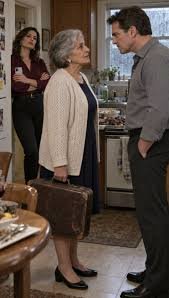
Despite everything, I laughed. The sound surprised me.
The sixty days did not pass gently, but they passed honestly.
David tried bargaining first. He offered rent, repairs, even ownership shares in his stores. When I refused, he accused Henry of manipulating me. When that failed, he stopped speaking to me except about practical matters.
Emily moved her belongings out of my bedroom before I returned. She did it without asking me to help. The shelves intended for her shoes came down, and my family photographs went back onto the dresser.
She and David argued behind closed doors, yet she never again called the house theirs in my presence.
I did not resume the life I had left. David ironed his own shirts. Emily arranged childcare. Groceries appeared without my list. When someone left a plate in the sink, it remained there until the person responsible washed it.
The house grew untidy before it grew fair.
Peter and Alice adjusted more easily than the adults. Peter resumed asking for chocolate cake on Fridays, but the first week I told him we would bake it together. He read the measurements while Alice shook sprinkles across the frosting, most of them missing the cake.
David came into the kitchen while we were laughing. He stopped at the doorway, looking at the flour on the counter and the empty chair beside me.
For years, I would have invited him in before he had to ask.
This time, I waited.
“Could I help?” he said.
Peter looked at me.
“Wash your hands,” I answered.
It was not forgiveness. It was one honest beginning.
On the fifty-eighth day, the moving truck arrived. Emily had found a rental across town, close enough that the children would remain in the same school. She and David were not leaving together.
The truth about the condo money had opened questions their marriage could no longer postpone. Emily had chosen the rental for herself and the children. David had taken a small apartment above his second store while they decided whether anything between them could be rebuilt.
Boxes crowded the hallway. David carried the last one to his car, then returned with the house key resting in his open palm.
Henry stood near the entry table, not as an enforcer, but because David had asked him to be there.
“I blamed you,” David told him.
Henry nodded. “I know.”
“You could have exposed me sooner.”
“It wasn’t my truth to expose. Your mother had to choose.”
David looked at me. The bravado that had once filled the doorway was gone.
“I kept thinking if I could make you seem helpless, then taking control would feel responsible.”
My throat tightened.
“Did you believe it?”
“Sometimes.” He swallowed. “Mostly I needed you to.”
He placed the key in my hand.
“I’m sorry about the house. And the money. And the bracelet.”
“You forgot one thing.”
His eyes lifted.
“You made your children doubt what they could see with their own eyes.”
He looked toward Peter and Alice, waiting beside Emily’s car.
“I know.”
“Repair that before you ask me to trust you again.”
He nodded. He did not ask for a hug. He did not ask me to shorten the consequence so he could feel forgiven.
At the door, he paused.
“Mom?”
“Yes?”
“May I call you next Sunday?”
The question was ordinary. That was what made it matter.
“You may call,” I said. “I may not be ready to answer.”
“I understand.”
For once, I believed he did.
Emily waited until David had driven away before approaching me. She held no phone in her hand, no polished smile on her face.
“I told myself you liked taking care of everything,” she said. “It was easier than admitting I liked letting you.”
“Yes.”
“I’m not asking you to forgive me.”
“Good.”
She nodded, tears brightening her eyes without falling.
“The children want you in their lives.”
“I want them in mine. We will arrange that directly and respectfully.”
“We will.”
Peter came running back from the car with Alice behind him. He carried the wooden photograph box against his chest.
“This stays with Grandma,” he told his mother.
Emily stepped aside. “Yes, it does.”
Inside, Peter placed it on the entry table where Henry’s envelope had rested. Alice climbed onto the sofa and patted the cushion beside her.
“I saved your seat.”
I sat down. She leaned against my arm, and Peter settled on my other side, careful of the bracelet at my wrist.
“There’s something in the box,” he said.
I opened it. Beneath Albert’s photograph lay a folded piece of paper I had never seen. Peter explained that he had found it behind the loose lining weeks earlier, on the afternoon he heard Emily talking about the closet. He had been afraid someone would throw the box away, so he hid the note beneath the photographs and carried the box downstairs when I left.
The handwriting was Albert’s.
Cath, if this house ever becomes too loud with other people’s wants, remember that the quiet inside it belongs to you, too. A home is the place where no one asks you to earn your chair.
I read it twice.
Henry turned toward the window and pressed his lips together. Peter watched me anxiously.
“Was it okay that I hid it?”
I drew him close.
“You protected it.”
“I thought Grandpa might be reminding you.”
He was.
That evening, after the moving truck disappeared and Henry drove home, I made tea in my own kitchen. Three cups waited on the table: one for me, one for Peter, mostly milk, and one for Alice, who insisted tea tasted better with sprinkles beside it.
The house was quieter than it had been in years, but it no longer felt empty.
Alice climbed into the chair beside mine. Peter placed Albert’s note beneath the glass top of the wooden box, where it could be seen without being damaged.
I rested my bracelet against the warm cup and looked at the two children waiting for me—not to serve them, not to disappear for them, but simply to sit.
Then I took my place at the table, and no one asked me to earn it.
