

Raymond called me separately.
He apologized, in a voice so sincere it nearly made me cry, for not noticing sooner.
Carol sent flowers with a note that read, I’m ashamed I let your generosity become background noise.
I kept that note.
Not because it fixed anything.
Because it was the first time someone in that family named the truth without me forcing it into the open.
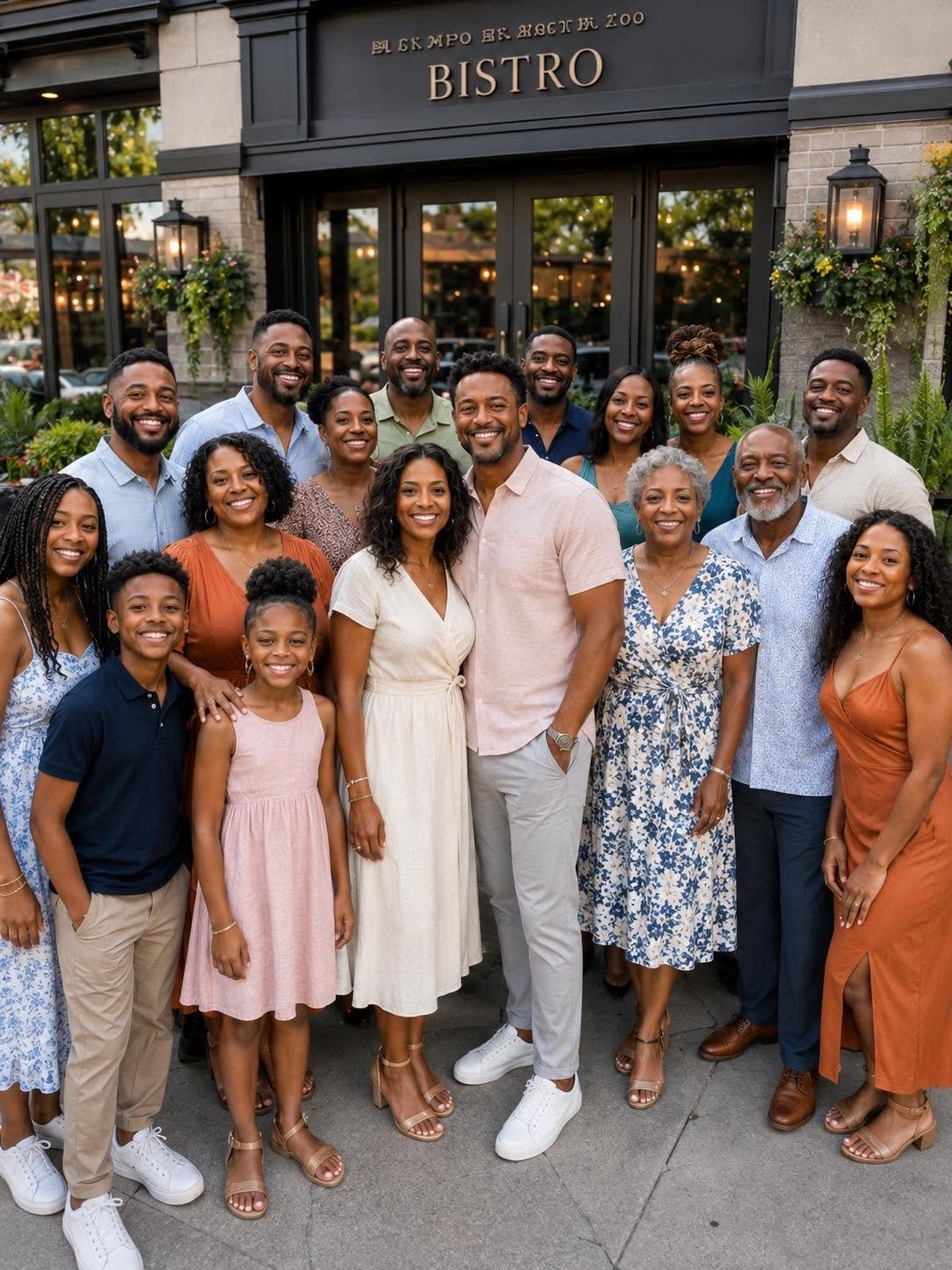
Three months later, Carol suggested a family cookout at their house.
Ordinarily that sort of invitation would have tightened every muscle in my body.
This time, before I could even ask, Owen said, “I already sent the group text.”
He showed me his phone.
For Saturday, everyone bring one dish and whatever you want to drink. We’re splitting the catering tray cost evenly by household. I’ll send amounts tonight.
Simple.
Clear.
No wiggle room.
No hiding.
Brooke responded with a thumbs-up so stiff I could practically hear her grinding her teeth.
At the cookout, people brought what they said they would.
Dean paid his share before he arrived.
Brooke showed up with a salad and no commentary.
Nobody made jokes about me covering anything.
Nobody looked at my purse when the dessert trays came out.
Nobody ordered extras and assumed the math would disappear.
And maybe the strangest part of all was realizing how easy normal was once everyone stopped building their comfort on top of my reluctance.
Later that evening, after the guests had gone and the sun was dropping behind Raymond’s fence line, Carol handed me a foil container of leftovers.
“You seem lighter,” she said softly.
I smiled.
“I am.”
She nodded as though she understood exactly what that meant.
Maybe she did.
Six months after the birthday dinner, Owen came home one Friday and set a small navy envelope on the kitchen counter.
I looked at it, then at him.
“What’s this?”
“Open it.”
Inside was a printed account summary.
He had reopened a travel fund.
Not the old one.
A new one.
This one was titled Wherever We Go—Together.
There was already money in it.
Not a fortune.
But enough to prove intention.
“I’m not asking you to trust me because of that,” he said. “I know money doesn’t solve what I did. I just wanted you to know I’m building something I can’t touch alone.”
I looked up.
He had added my authorization requirement to the account before ever showing it to me.
That mattered more than the balance.
I placed the paper back in the envelope.
“Why didn’t you call it Maine?”
He gave a small, sad smile.
“Because I haven’t earned Maine back yet.”
That answer hit me harder than any dramatic speech could have.
For a while, neither of us said anything.
Then he asked quietly, “Do you think we’ll ever take that trip?”
I thought about the past year.
The anger.
The embarrassment.
The revelation.
The ugly, necessary honesty.
Then I thought about the cookout, the counseling, the message he sent his brother without asking me what to say, the new account he couldn’t access alone.
“Maybe,” I said.
He nodded once.
That was enough.
And for the first time, I believed he understood that hope was not something he got to demand from me.
It was something he had to earn.
One dinner.
One boundary.
One truthful choice at a time.
That night, when I went upstairs, I realized I had attended a family gathering recently without bringing an emergency credit card in my coat pocket.
I had stopped bracing for the check before dessert.
I had stopped calculating everyone else’s appetites in dollars.
I had stopped preparing to rescue grown adults from the cost of their own choices.
It sounds small until you’ve lived that way for years.
Freedom often does.
And if there was one thing I knew with absolute certainty now, it was this:
I would never again confuse being loved with being used.
Not by his family.
