

"Then start with him," I said.
She looked at me steadily. "We're starting with everyone who had access to that house that morning. That includes him. It also includes people you haven't thought of yet."
I didn't understand what she meant until three weeks later.
Marcus's alibi, once detectives pulled it apart, turned out to be exactly what it appeared to be. Badge swipe records from the Danforth Construction site office placed him thirty-eight miles away at 8:14 a.m., the approximate time the medical examiner now estimated as Danielle's time of death based on a more thorough secondary review. Three coworkers confirmed he'd been in a site walkthrough until well past nine.
It was infuriating to hear. I wanted the case against him to be airtight. Instead, detectives kept circling back to something else — a Ring doorbell clip from a neighbor two houses down, posted originally in a Cedar Hollow community Facebook group weeks before the funeral, back when it was just neighborhood chatter about "some car parked funny that morning." A dark sedan, partially visible, idling near the Reeves driveway around 7:50 a.m.
Detective Nash requested the full, unedited footage directly from the neighbor's cloud storage account. It took another two weeks and a subpoena to the Reeveses' own home security provider — because it turned out their indoor camera, the one mounted above the staircase that Marcus had told the first responding officers "wasn't working that day," had never actually stopped recording. It had simply stopped syncing to the app on his phone due to a router issue, while the footage itself kept quietly uploading to a separate cloud backup neither Marcus nor, frankly, most people, would have thought to check.
Detective Nash watched that footage before I ever did. She came to my parents' house herself to explain what was on it, sitting across from us at the kitchen table where Danielle used to do her taxes every April.
"At 7:52 that morning," she said carefully, "a woman enters the house through the back door, which was unlocked for a delivery Danielle was expecting. She goes upstairs. There's an argument. It lasts under two minutes. Then there's a fall."
"Who," my mother whispered.
"Brianna Foster."
I have replayed that footage exactly once, in a courtroom eleven months later, and I don't think I'll ever fully explain what it does to a person to watch, frame by frame, the last two minutes of their sister's life.
What the investigation eventually pieced together was this: Brianna had learned, sometime in the weeks before Danielle's death, that Danielle knew about the affair and had chosen not to immediately leave Marcus — not out of weakness, but because she was quietly securing her finances and her son's future first, exactly as she'd explained to Holt and to me. Brianna, unaware of any of that careful planning, interpreted Danielle's silence as a woman who intended to stay, to keep Marcus, to win. The anonymous messages in Danielle's journal, cell records later confirmed, had come from a prepaid phone purchased at a gas station forty minutes from Brianna's apartment, paid for in cash, activated the same week Danielle's pregnancy became visible enough for coworkers at Marcus's office to start congratulating him.
The morning of the fall, Brianna had gone to the house to confront Danielle directly, believing — she would later tell investigators through her own attorney, trying and failing to frame it as an accident — that she only wanted to "talk woman to woman." The footage told a different story. A shove. A stumble at the top of the stairs. A woman seven months pregnant with nothing to catch her.
Brianna didn't call 911. She left through the same back door she'd come in, and drove to a nail salon appointment she'd later use as her alibi — an appointment records showed she'd actually canceled by text message at 8:41 a.m., nearly an hour after she was scheduled to arrive, a detail the salon's booking software preserved with a timestamp that would matter enormously in court.
DNA collected from beneath Danielle's fingernails during the medical examiner's expanded review — a routine part of any reopened investigation, since the first autopsy hadn't required it — matched Brianna Foster's, taken from a voluntary elimination swab she gave early on, before anyone suspected her, back when she still believed her only crime, as far as the world knew, was sleeping with a married man.
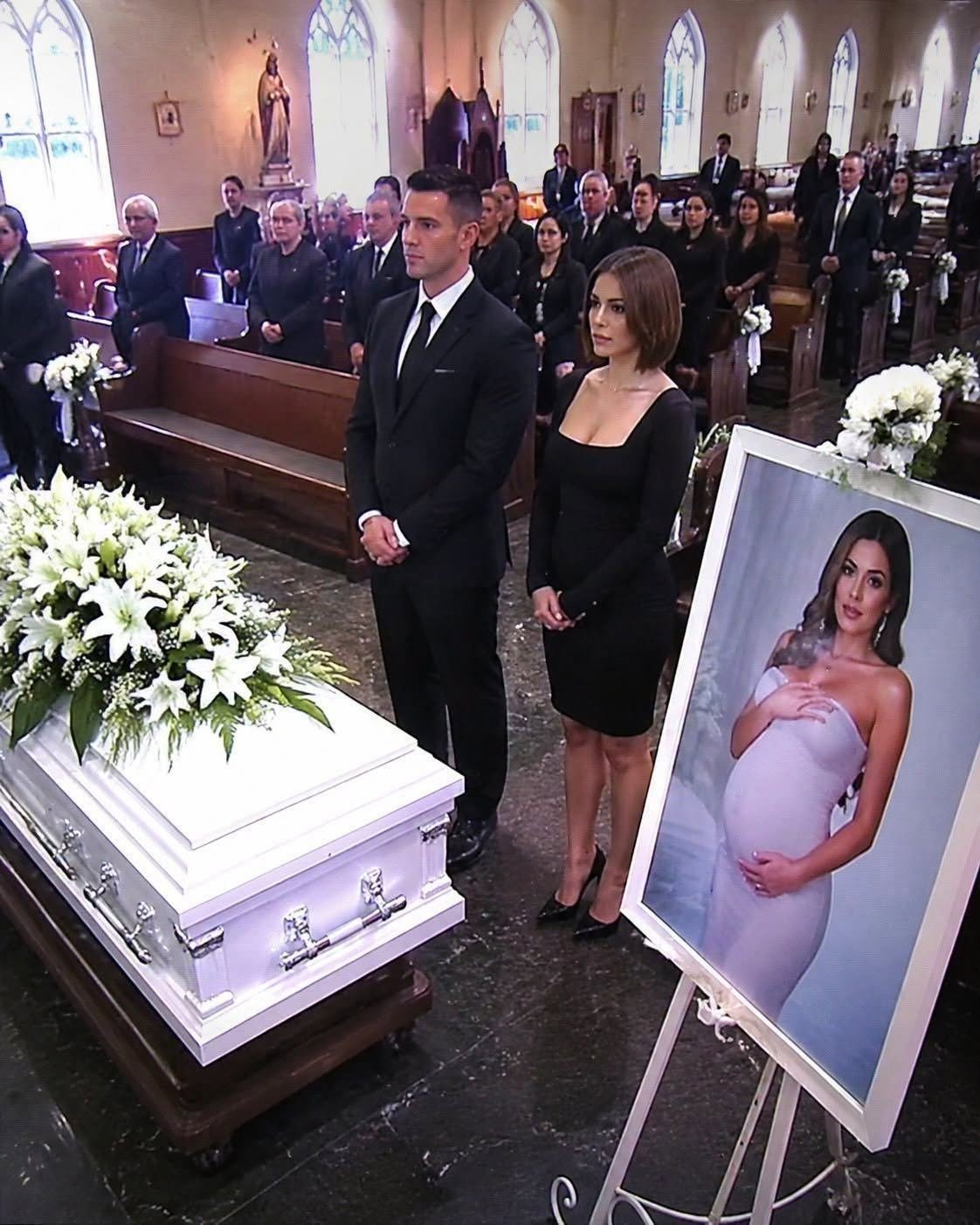
Brianna Foster was arrested nine weeks after the funeral. Because Danielle was thirty-two weeks pregnant, Texas law allowed prosecutors to bring a separate charge for the death of Micah alongside the manslaughter charge for Danielle, something Gerald Holt explained to our family plainly, sitting in my parents' living room the night of the arrest.
"It doesn't undo anything," he said gently, when my mother asked what it would actually change. "But it means the law recognizes there were two lives lost that morning, not one."
Brianna's trial, a year later, ended in a plea agreement rather than a verdict — twenty-two years, with prosecutors and Holt both telling us privately that the footage alone would likely have secured a conviction at trial, but that sparing our family the ordeal of testifying in detail about Danielle's last two minutes was worth the certainty of a plea.
I sat four rows behind Brianna at sentencing. She never turned around.
