

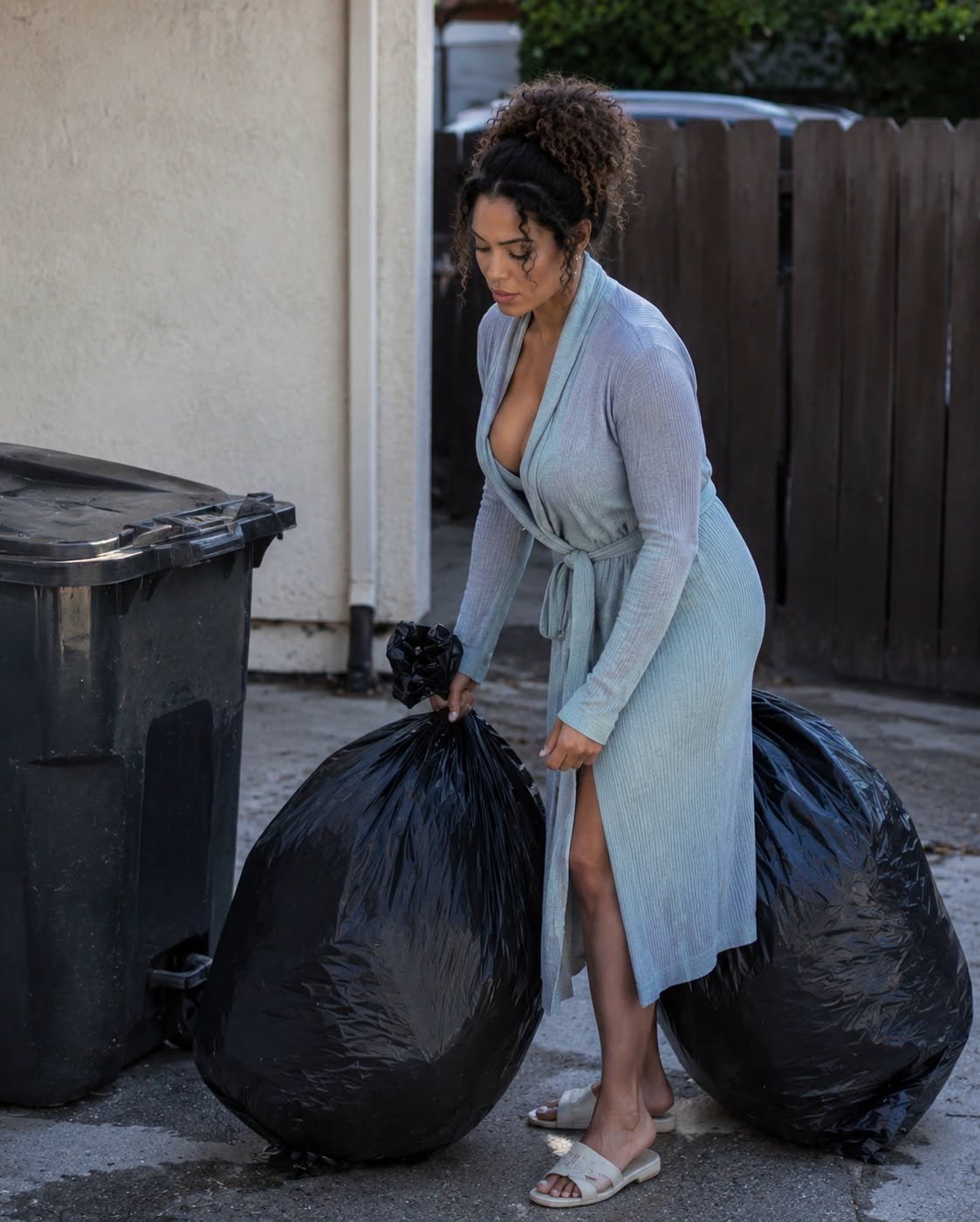
“We should not watch her,” Anna said, though she did not turn away from the pane. “Grief makes its own schedule, Robert, and Barbara has had more than her share of quiet hours in that house.”
I did not answer her. I reached for my canvas jacket behind the kitchen door, slipped my boots on without tying the laces, and stepped out onto the front porch.
The air outside smelled of damp earth and the oily tang of heating oil, which our neighbor Mr. Henderson had just delivered to the corner house at three dollars and forty cents a gallon. I walked down our three wooden steps, feeling the cold dampness seep through my thin socks, and crossed the asphalt road.
Barbara did not look up until my boots crunched on the gravel of her driveway. She was still holding the neck of the black plastic bag, her knuckles white against the heavy material.
“Good morning, Barbara,” I said, stopping three feet from the low boxwood hedge that separated our yards. “I was just checking the gutters on my side, and I saw you working.”
She turned her face toward me, her expression polite but distant, like a teller behind a thick pane of safety glass. She was sixty-eight now, a retired bank teller who had spent her life counting other people’s coins with a quiet, formal precision.
“Good morning, Robert,” she said. Her voice was formal, carrying the slight detachment she always used when we spoke of the weather or the neighborhood association dues. “The trees are shedding early this year.”
“They are,” I said. “Let me take that bag to the curb for you. It looks like a heavy load for a Tuesday morning.”
She did not let go. Instead, she gave the black plastic a sharp, defensive pull toward her boots, her shoulders tensing beneath her light woolen jacket.
